Your Cart is Empty



Find CCW classes in California taught by DOJ-certified instructors, plus the training, cost, and carry rules for a California CCW license.
254 instructors and schools listed
North Hollywood, CA
Redding, CA
Fountain Valley, CA
Inglewood, CA
Los Angeles, CA
Garden Grove, CA
Commerce, CA
Oceanside, CA
Beverly Hills, CA
Foster City, CA
Sylmar, CA
Laguna Niguel, CA
Valencia, CA
Redding, CA
El Cajon, CA
Piru, CA
Pacoima, CA
Oakland, CA
Riverside, CA
Santa Clara, CA
Petaluma, CA
Rocklin, CA
Valley Springs, CA
Burlingame, CA
San Diego, CA
Colton, CA
Lake View Terrace, CA
Fallbrook, CA
Fullerton, CA
San Bernardino, CA
Fullerton, CA
Montebello, CA
Murrieta, CA
Upland, CA
Burbank, CA
Friant, CA
Grand Terrace, CA
San Diego, CA
Los Angeles, CA
Concord, CA
Sacramento, CA
Costa Mesa, CA
Napa, CA
North Highlands, CA
Orange, CA
Sacramento, CA
Oceanside, CA
Glendale, CA
Lake Forest, CA
Fullerton, CA
Folsom, CA
Santa Paula, CA
Stockton, CA
Corona, CA
Placerville, CA
Torrance, CA
Glendale, CA
Ventura, CA
Antioch, CA
Corona, CA
Magalia, CA
Tulare, CA
Rocklin, CA
Sloughhouse, CA
Sacramento, CA
Victorville, CA
San Jose, CA
Los Angeles, CA
Redding, CA
Castella, CA
Chino Hills, CA
Redding, CA
National City, CA
Pala, CA
Torrance, CA
Eastvale, CA
Grass Valley, CA
El Centro, CA
Orange, CA
Carson, CA
Fallbrook, CA
San Diego, CA
Yorba Linda, CA
Huntington Beach, CA
Norwalk, CA
Spring Valley, CA
Moorpark, CA
Torrance, CA
El Monte, CA
Santa Rosa, CA
Oceanside, CA
Huntington Beach, CA
Torrance, CA
El Dorado Hills, CA
Tracy, CA
Bakersfield, CA
Marysville, CA
Clovis, CA
Hayward, CA
Riverside, CA
Modesto, CA
Stanton, CA
Oceanside, CA
Sacramento, CA
Murrieta, CA
El Centro, CA
Anaheim, CA
Bakersfield, CA
La Puente, CA
Roseville, CA
Sylmar, CA
Yorba Linda, CA
Canyon Lake, CA
Lincoln, CA
Simi Valley, CA
Torrance, CA
Oakley, CA
Sacramento, CA
San Clemente, CA
Apple Valley, CA
Sacramento, CA
Temecula, CA
Long Beach, CA
Martinez, CA
San Clemente, CA
Beverly Hills, CA
San Dimas, CA
San Diego, CA
Salinas, CA
Bakersfield, CA
Dulzura, CA
Lakewood, CA
Dulzura, CA
Simi Valley, CA
Novato, CA
Acton, CA
Los Angeles, CA
Palm Desert, CA
Placentia, CA
Santa Ana, CA
Santa Barbara, CA
Vista, CA
Sanger, CA
Berkeley, CA
Azusa, CA
California City, CA
Carlsbad, CA
Arcata, CA
Costa Mesa, CA
Sloughhouse, CA
Linden, CA
Sloughhouse, CA
El Centro, CA
Camino, CA
La Palma, CA
Laguna Niguel, CA
Linden, CA
Tehachapi, CA
Thousand Oaks, CA
California City, CA
Gustine, CA
Los Angeles, CA
Oakland, CA
San Diego, CA
Van Nuys, CA
National City, CA
Richmond, CA
Rocklin, CA
Santa Ana, CA
Vista, CA
Lake Forest, CA
Lindsay, CA
San Leandro, CA
Visalia, CA
West Point, CA
Grass Valley, CA
Anderson, CA
Bellflower, CA
Burbank, CA
Campbell, CA
Encinitas, CA
Porterville, CA
San Diego, CA
Van Nuys, CA
Vista, CA
Diamond Bar, CA
Modesto, CA
Porterville, CA
Redding, CA
Inglewood, CA
Los Angeles, CA
Mokelumne Hill, CA
Roseville, CA
Roseville, CA
Thousand Oaks, CA
West Covina, CA
Huntington Beach, CA
Murrieta, CA
Rancho Cordova, CA
Browns Valley, CA
Lake Forest, CA
Midway City, CA
Oxnard, CA
Ripon, CA
Sanger, CA
Stanton, CA
Whittier, CA
San Francisco, CA
Torrance, CA
Visalia, CA
West Hills, CA
Anaheim, CA
Bakersfield, CA
Beverly Hills, CA
Bonsall, CA
Chowchilla, CA
Concord, CA
Costa Mesa, CA
Culver City, CA
El Cajon, CA
Fresno, CA
Merced, CA
Murrieta, CA
Murrieta, CA
Norco, CA
Oakland, CA
Oxnard, CA
Paradise, CA
Penryn, CA
Pinole, CA
San Bernardino, CA
San Jose, CA
Santa Clara, CA
Sloughhouse, CA
Sloughhouse, CA
Tehachapi, CA
Truckee, CA
Valencia, CA
Yuba City, CA
Anderson, CA
Auburn, CA
Corona, CA
Cypress, CA
Jackson, CA
Lake Elsinore, CA
Mather, CA
Morgan Hill, CA
Placerville, CA
Roseville, CA
Santa Maria, CA
Claim your free listing, add your class dates, and get a free Rounded Gear holster for your own carry gun when you're verified.
Claim Your ListingOfficial source: County Sheriff or City Police Chief
The cost depends on the county or city that issues your license. You pay a DOJ background check fee plus a local processing fee that state law limits to the agency's reasonable costs, and up to half of the local fee can be collected when you apply. Training and any required psychological assessment cost extra. For example, Santa Cruz County charges a $504 local fee as of July 1, 2026. For renewals, the DOJ fee for a standard license is $93 as of September 1, 2026.
A new license requires a course of at least 16 hours, and a renewal requires at least 8 hours. The course must include at least 1 hour on mental health resources, a written exam, and live-fire qualification with every gun you want listed on the license. Some licensing authorities instead require a POST-certified community college course of up to 24 hours.
No. California does not allow permitless carry. You need a CCW license from your county sheriff or city police chief to carry a concealed gun in public.
By law, the licensing authority must tell you in writing whether your new license is approved or denied within 120 days of receiving your completed application, or within 30 days after it receives your DOJ background check results, whichever is later. Renewal applications follow the same 120-day rule. The total time also depends on how quickly you finish your interview, fingerprints, and training.
You must be at least 21 years old to get a CCW license in California. This applies to both California residents and non-residents.
Each state decides for itself which out-of-state permits it recognizes, and California does not set that list. Arizona, for example, recognizes any valid out-of-state permit by statute, as long as the holder is at least 21, legally present, and not prohibited from having a gun. In the other direction, California does not honor any other state's permit, so visitors must get a California non-resident CCW license, which became available on January 1, 2026.
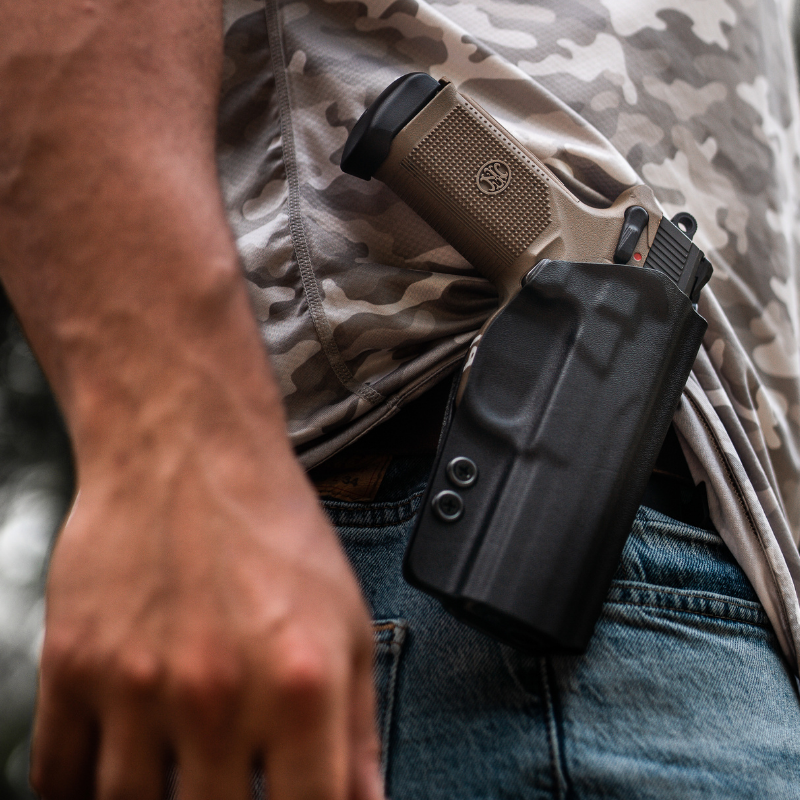
California's Penal Code does not require a specific type of holster for CCW licensees. Your licensing authority can add reasonable conditions on the time, place, and manner of carry, so its license conditions may include how you carry. Even where a holster is not required, it is the safest way to carry, so choose one that covers the trigger guard completely and holds the gun securely, like a KYDEX holster molded to your exact gun.
Listings come from public business information and instructor submissions. Laws change, so confirm current requirements with the official state agency before you apply. This page is not legal advice. Last reviewed October 15, 2026.