Your Cart is Empty



Find approved concealed handgun permit classes in North Carolina, plus the training, cost, and carry rules you need to know before you apply with your county sheriff.
198 instructors and schools listed
Charlotte, NC
Charlotte, NC
Fuquay-Varina, NC
Harrisburg, NC
Cornelius, NC
Mooresville, NC
Belmont, NC
Durham, NC
Kernersville, NC
Sanford, NC
Wilmington, NC
Statesville, NC
Greenville, NC
Four Oaks, NC
Concord, NC
Waynesville, NC
Graham, NC
Rural Hall, NC
Charlotte, NC
Burnsville, NC
Raleigh, NC
Raleigh, NC
Youngsville, NC
Apex, NC
Raleigh, NC
Cornelius, NC
Wendell, NC
Greensboro, NC
Gastonia, NC
Ellenboro, NC
Smithfield, NC
Thomasville, NC
Sanford, NC
Statesville, NC
Monroe, NC
Wagram, NC
Charlotte, NC
Thomasville, NC
Newport, NC
Greensboro, NC
Hope Mills, NC
Charlotte, NC
Charlotte, NC
Newport, NC
Kannapolis, NC
Lumber Bridge, NC
Cove City, NC
Millers Creek, NC
Jacksonville, NC
Raeford, NC
Warrenton, NC
Raleigh, NC
Yadkinville, NC
Greenville, NC
Hillsborough, NC
Southern Pines, NC
Raleigh, NC
Cape Carteret, NC
Mooresville, NC
Fayetteville, NC
Huntersville, NC
Garner, NC
Winston-Salem, NC
Newport, NC
Goldsboro, NC
Belmont, NC
Reidsville, NC
Cleveland, NC
Mars Hill, NC
China Grove, NC
Wilson, NC
Pittsboro, NC
Williamston, NC
Pisgah Forest, NC
Huntersville, NC
Newton, NC
Charlotte, NC
Kings Mountain, NC
Weaverville, NC
Greensboro, NC
Naples, NC
Autryville, NC
Clyde, NC
Parkton, NC
Clayton, NC
Hendersonville, NC
Middlesex, NC
Pittsboro, NC
Kernersville, NC
Archdale, NC
Hudson, NC
Matthews, NC
Denver, NC
Southport, NC
Fayetteville, NC
Fairview, NC
Iron Station, NC
Oxford, NC
Randleman, NC
Greenville, NC
Oxford, NC
Camden, NC
Four Oaks, NC
Gibsonville, NC
Kinston, NC
Greenville, NC
Selma, NC
Washington, NC
Jefferson, NC
Mooresville, NC
Winston-Salem, NC
Cameron, NC
Apex, NC
Charlotte, NC
Durham, NC
Greenville, NC
Kenly, NC
Zebulon, NC
Youngsville, NC
Charlotte, NC
Greensboro, NC
Watha, NC
Fayetteville, NC
Kannapolis, NC
Winston-Salem, NC
Wake Forest, NC
Burlington, NC
Chocowinity, NC
Shallotte, NC
Burgaw, NC
Pleasant Garden, NC
Raleigh, NC
Charlotte, NC
Hope Mills, NC
Sanford, NC
Wake Forest, NC
Bunnlevel, NC
Raleigh, NC
Altamahaw, NC
Bunnlevel, NC
Charlotte, NC
Kenly, NC
State Road, NC
Castle Hayne, NC
Concord, NC
Lawndale, NC
Charlotte, NC
Charlotte, NC
Pikeville, NC
Richlands, NC
Ruffin, NC
Bolivia, NC
Burlington, NC
Raleigh, NC
Broadway, NC
Casar, NC
Greensboro, NC
Kernersville, NC
Reidsville, NC
Rocky Point, NC
Shallotte, NC
Wake Forest, NC
Davidson, NC
Winston-Salem, NC
Albemarle, NC
Asheville, NC
Casar, NC
Charlotte, NC
Charlotte, NC
Conover, NC
Dana, NC
Dunn, NC
Franklin, NC
Greensboro, NC
Grover, NC
Liberty, NC
Mebane, NC
New Bern, NC
New Hill, NC
New Hill, NC
New London, NC
Reidsville, NC
Reidsville, NC
Rowland, NC
Swansboro, NC
Wilmington, NC
Bostic, NC
Greensboro, NC
Greenville, NC
Hendersonville, NC
Huntersville, NC
Laurinburg, NC
Lexington, NC
Midland, NC
Salisbury, NC
Selma, NC
Selma, NC
Winston-Salem, NC
Claim your free listing, add your class dates, and get a free Rounded Gear holster for your own carry gun when you're verified.
Claim Your ListingOfficial source: County Sheriff's Office (county of residence)
The state application fee is $80, and the sheriff may add a fingerprint fee of up to $10, so most new applicants pay up to $90 in government fees. Renewal costs $75. The training course is a separate cost set by the instructor.
The approved concealed carry handgun course is eight hours of instruction. It includes two hours on legal topics such as use of deadly force and prohibited places, a written exam, safe handling and storage, marksmanship fundamentals, and actual firing of handguns.
No. As of October 2026, North Carolina does not have permitless concealed carry. Senate Bill 50 was vetoed by the governor in June 2025. The Senate overrode the veto in July 2025, but the House has not voted to override it, so the bill is not law and a Concealed Handgun Permit is still required to carry concealed off your own premises.
State law gives the sheriff 45 days to issue or deny a permit. The 45 days start once the sheriff has your complete application and the required mental health records, so the total time from applying can be longer than 45 days.
You must be at least 21 years old. North Carolina law does not set a lower age for military members or veterans.
North Carolina law prohibits carrying a concealed gun off your own premises without a permit, but it does not require a permit to carry a handgun openly. Open carry is still restricted in certain places, for example while participating in or attending a parade, funeral procession, picket line, or demonstration on public property, and at schools and other locations where state law bans weapons.
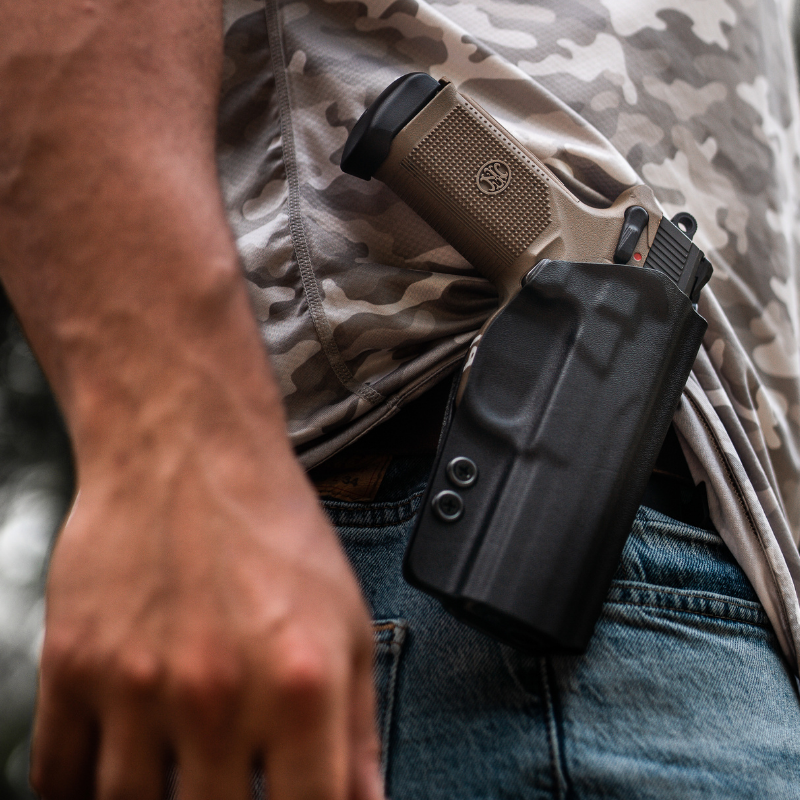
North Carolina law does not require you to use a holster to carry a handgun. The approved permit course does teach drawing and presenting a handgun from various holsters, and a good holster is one of the most important pieces of safe carry gear. If you carry, choose one that covers the trigger guard completely and holds the gun securely, like a KYDEX holster molded to your exact gun.
Listings come from public business information and instructor submissions. Laws change, so confirm current requirements with the official state agency before you apply. This page is not legal advice. Last reviewed October 15, 2026.