

Your Cart is Empty



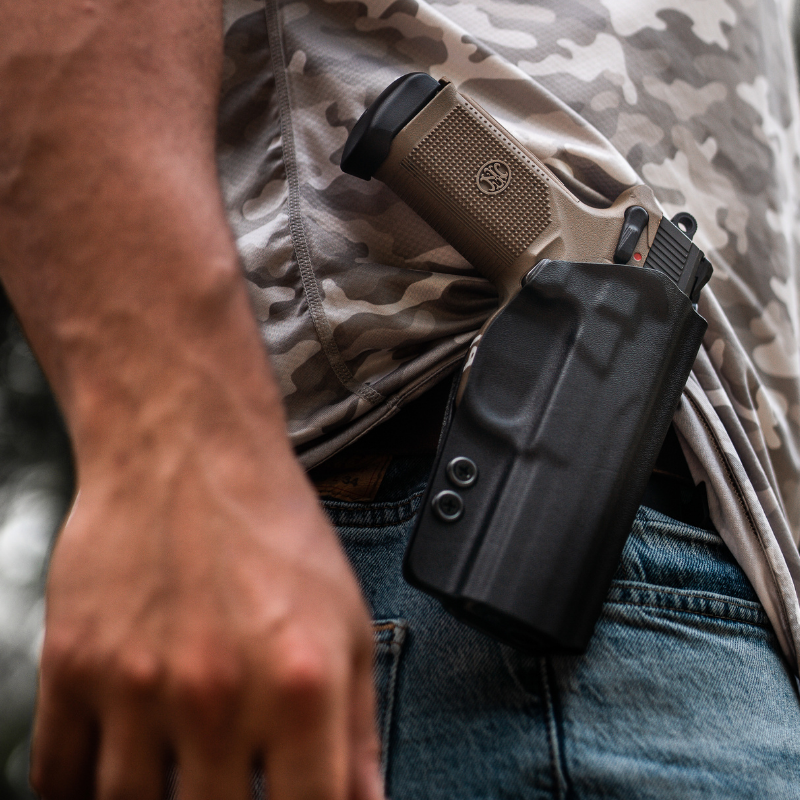


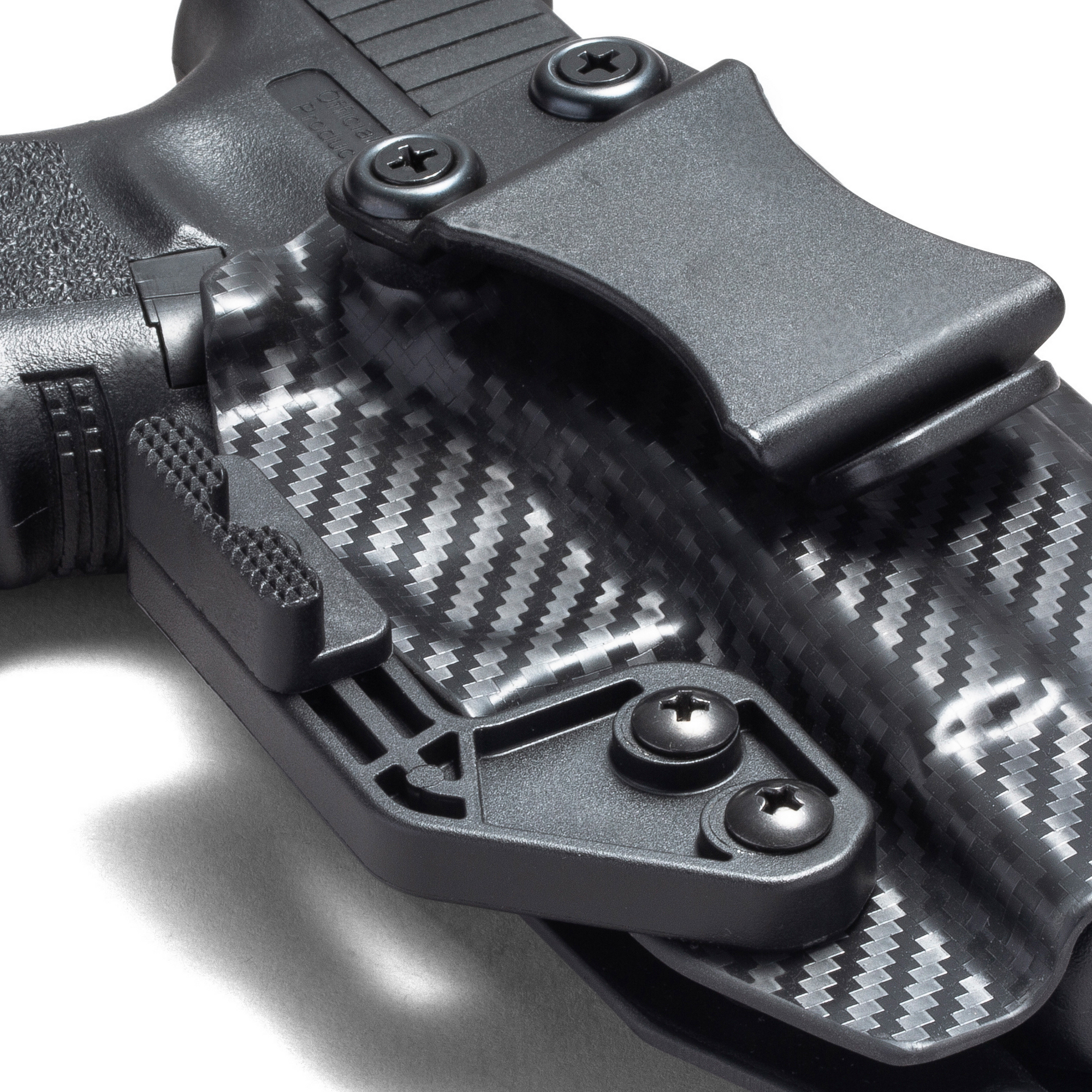






The 1911 is one of the most iconic and widely carried pistols in American history. Designed by John Moses Browning and adopted by the U.S. military in 1911, it has been refined across more than a century into one of the most accurate, ergonomic, and shootable handgun platforms ever produced. Available in Government (5-inch barrel, 8.25-inch overall length, 39 oz unloaded), Commander (4.25-inch barrel, 7.75-inch overall length, 36 oz), Officer (3.5-inch barrel), and Defender (3-inch barrel) configurations, the 1911 gives concealed carriers a range of size options to match their body type, carry position, and daily routine. Chambered primarily in .45 ACP with a 7+1 or 8+1 capacity — and increasingly popular in 9mm for higher capacity — the 1911's single-action trigger, slim single-stack profile, and grip ergonomics make it a serious choice for experienced concealed carriers. This guide covers every 1911 holster configuration from Concealment Express, precision-molded from Kydex and made in Jacksonville, FL.
Best 1911 Holsters for Concealed Carry
Concealment Express builds every 1911 holster around the exact dimensions of each barrel-length variant — Government, Commander, and Officer sizes are each molded separately for a precise fit. The holster indexes on the trigger guard and ejection port for consistent retention and draw stroke, and ships with our proprietary Posi-Click® retention system for audible confirmation every time the pistol seats. Here are the primary carry configurations available for the 1911.
IWB Classic Holster for 1911
The most popular choice for 1911 concealed carry. The IWB Classic is precision-molded to the exact barrel-length variant you carry — Government, Commander, or Officer — delivering a low-profile inside-the-waistband setup that works under a cover garment or untucked shirt. The single-clip design keeps bulk minimal while anchoring the holster securely to a quality gun belt. Adjustable cant (0–15 degrees) and ride height let you dial in the draw to match your carry position and body type. The full-length sweat guard protects the 1911's steel finish from moisture and keeps the holster comfortable against your skin during all-day wear. A slight forward cant (FBI tilt) is recommended for Government-size 1911s to aid concealment of the longer slide at strong-side carry. Best for: 3–5 o'clock strong-side carry, experienced carriers familiar with the 1911's size and weight.
Tuckable IWB Holster for 1911
For professional environments or tucked-in attire, the Tuckable IWB allows your 1911 to disappear completely beneath a dress shirt or sport coat. The tuckable clip positions between your belt and pants, allowing your shirt to tuck cleanly over the holster body while the pistol remains fully accessible. The 1911's slim 1.0–1.2-inch width is a genuine advantage here — the single-stack frame prints less under fabric than any double-stack pistol of comparable caliber. Same Posi-Click® retention and adjustable cant as the IWB Classic. Best for: office carry, business attire, formal environments where deep concealment and professional appearance are both non-negotiable.
Plus Line IWB with Claw for 1911
Built for appendix carry. The Plus Line adds a concealment claw that hooks behind your belt and uses leverage to press the grip of the 1911 flat against your abdomen, reducing the grip printing that is the primary concealment challenge at the 12–1 o'clock position. The 1911's grip safety and manual thumb safety make it one of the safest platforms for appendix carry — cocked-and-locked (Condition One) carry gives you three independent safeties between the trigger and discharge. The Plus Line also includes a fiber-reinforced stealth clip, full-length sweat guard, and adjustable retention. Best for: appendix carry with a Commander or Officer-size 1911, experienced cocked-and-locked carriers, those who want maximum active safeties in the AIWB position.
OWB Paddle Holster for 1911
The traditional 1911 carry setup, updated for modern use. The OWB Paddle clips over your waistband in seconds without threading through belt loops — ideal for range days, training sessions, or any situation requiring quick deployment and re-holstering. The open-top design allows the 1911's crisp single-action trigger to deliver its full potential on the draw, with no thumb break or retention device slowing the stroke. Molded to your specific 1911 barrel-length variant with Posi-Click® retention. Best for: range use, dry fire training, open carry, home defense staging, and experienced shooters who want the fastest possible draw from an OWB platform.
OWB Belt Loop Holster for 1911
Maximum stability for a heavy pistol. The 1911's steel frame — 36–39 oz unloaded, over 2.5 lbs loaded — demands a solid attachment point, and the OWB Belt Loop delivers it. Two reinforced belt loops anchor directly to your belt, distributing the 1911's weight across multiple contact points with zero lateral movement. The pancake-style body pulls the holster tight against your torso for improved concealment under a jacket or flannel. Best for: all-day open carry, duty use, cold-weather carry under outerwear, anyone prioritizing stability and weight distribution for an extended-wear steel-frame pistol.
1911 Holster Buying Guide
The 1911 presents a unique set of holster requirements that differ from modern polymer-framed pistols. Its combination of slim width, significant weight, manual safety, and multiple barrel-length variants means you need to think carefully about fit, carry position, and retention system before selecting a holster. Here is what matters most for a 1911 holster built for daily carry.
- Barrel-length fit is critical: A holster molded for a Government (5-inch) 1911 will not properly fit a Commander (4.25-inch) or Officer (3.5-inch) variant. The muzzle end of the holster needs to match your barrel length for correct retention indexing and trigger guard coverage. Every Concealment Express 1911 holster is molded to a specific barrel-length configuration — confirm you are selecting the correct variant at checkout. Running the wrong-length holster compromises both retention and safety.
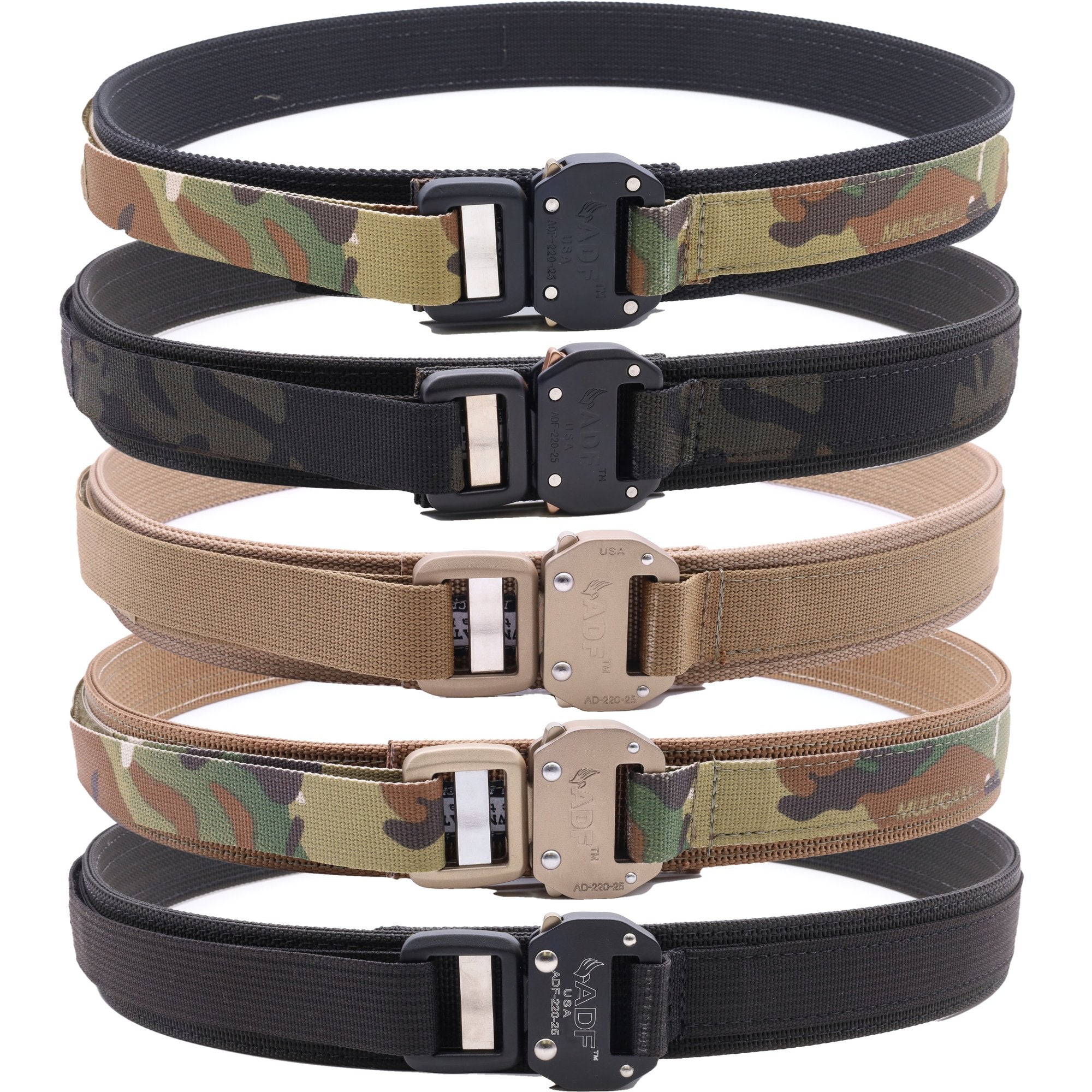
- Weight demands a quality gun belt: The 1911's steel construction makes it one of the heaviest carry pistols in common use. A Government model weighs 39 oz unloaded — nearly 2.5 lbs loaded. That weight requires a rigid, purpose-built gun belt to prevent holster sag, cant shift, and discomfort during extended carry. A standard dress belt will allow the holster to tilt outward under the 1911's weight, compromising both concealment and draw consistency. A 1.5-inch reinforced gun belt is non-negotiable for daily 1911 carry.
- Kydex preserves the finish: The 1911's steel frame and slide — particularly on blued or case-hardened models — is susceptible to holster wear. Kydex's hard, smooth interior surface causes significantly less finish wear than leather, which can act as an abrasive over time. Concealment Express holsters are molded with smooth interior walls that contact the pistol only at the retention points, protecting your finish across years of daily reholstering.
- The slim single-stack is a concealment asset: At approximately 1.0–1.2 inches wide at the slide and grip, the 1911 is among the slimmest pistols available for its power level. This single-stack profile is a genuine advantage for IWB carry — it prints less than double-stack 9mm pistols of comparable length. The 1911's width actually works in its favor for concealment, even if its length and weight require more attention to holster selection and carry position.
- Carry-ready safety protocol: The 1911 is designed to be carried cocked-and-locked (Condition One) — hammer back, manual thumb safety engaged, grip safety ready. This is not a flaw; it is a feature. A properly maintained 1911 in Condition One is as safe as any modern striker-fired pistol with the trigger covered. Your holster must fully cover the trigger guard and provide consistent, repeatable retention to support safe Condition One carry.
IWB vs OWB for 1911 — Which Is Right for You?
The 1911's size and weight make carry position selection more consequential than with lighter, more compact pistols. The right setup depends heavily on which 1911 variant you carry and your body type.
| Factor | IWB (Inside Waistband) | OWB (Outside Waistband) |
|---|---|---|
| Concealment | Very good — slim 1.0–1.2" width minimizes printing despite the longer slide | Moderate — requires a cover garment; 1911's length can print under lighter jackets |
| Comfort | Manageable with a Commander or Officer; Government size benefits from pants 1–2 sizes up | More comfortable for all-day carry of a heavy steel-frame pistol |
| Draw Speed | Good — 1911's single-action trigger delivers fast split times once the draw clears | Faster draw stroke; less clothing to clear; ideal for the 1911's single-action trigger |
| Weight Management | Requires a rigid gun belt; distributed against the body | Easier to manage weight; belt loops or paddle spread load across the belt |
| Best For | Daily concealed carry, Commander or Officer variants, experienced 1911 carriers | Range use, open carry, duty carry, Government-size 1911 all-day wear |
For most concealed carriers, a Commander-size 1911 (4.25-inch barrel, 36 oz) in an IWB holster hits the best balance of shootability and concealability. The Government-size is absolutely concealable IWB with the right holster and cover garment, but requires more wardrobe accommodation. Officer and Defender variants offer the easiest concealment but sacrifice some sight radius and, in .45 ACP, capacity.
Appendix Carry with the 1911
The 1911 is an underrated appendix carry platform, and for a specific reason: it is one of the safest pistols to carry in the AIWB position. The combination of a grip safety, manual thumb safety, and half-cock notch gives you three independent mechanical safeguards between the trigger and the hammer — more than any striker-fired pistol on the market. For carriers who are safety-conscious about muzzle direction at the appendix position, the 1911 in Condition One offers a level of mechanical redundancy that a Glock or similar striker-fired pistol simply cannot match.
- Commander or Officer size for AIWB: A Government-size 1911 (8.25 inches overall) is challenging to run appendix — the muzzle extends deep into the hip crease when seated. The Commander (7.75 inches) is the most popular AIWB 1911 configuration. The Officer (7.25 inches) is the most comfortable but reduces sight radius. Most dedicated AIWB 1911 carriers choose the Commander as the optimal compromise.
- Cocked-and-locked is correct carry: Never carry a 1911 appendix with the hammer down or at half-cock. Condition One — hammer back, thumb safety on — is the designed and intended carry mode. The thumb safety disengages naturally as your hand acquires a firing grip, making the draw as fast as any other platform. Practice the grip-safety disengage and thumb-safety sweep as one fluid motion.
- Use a claw: The 1911's grip-to-slide ratio means the grip can kick out at the appendix position. The concealment claw on the Plus Line holster uses belt leverage to press the grip flat against your abdomen. This is especially helpful with the longer Government grip.
- Gun belt is essential: The 1911's weight at the AIWB position demands a rigid gun belt. A quality 1.5-inch belt distributes the load and prevents the holster from sagging forward or shifting during movement.
Choosing the Right 1911 Size for Your Holster
The 1911 platform spans four primary frame and barrel-length configurations, each with different holster requirements and carry characteristics. Here is how each size affects your daily carry setup.
- Government (5" barrel, 8.25" OAL, ~39 oz): The original specification. Best accuracy and sight radius. Heaviest and longest — requires deliberate holster selection and wardrobe accommodation for IWB carry. Recommended for OWB or strong-side IWB with a cover garment. The gold standard for range days and open carry.
- Commander (4.25" barrel, 7.75" OAL, ~36 oz): The sweet spot for 1911 concealed carry. Three-quarters of an inch shorter than the Government with a minimal weight reduction, but meaningfully easier to conceal IWB. The most popular 1911 variant for everyday carry. Available in aluminum frame (Lightweight Commander) for additional weight savings down to ~27 oz unloaded.
- Officer (3.5" barrel, 7.25" OAL, ~34 oz): Compact and easier to conceal. Shorter grip reduces capacity to 6+1 in .45 ACP. Ideal for AIWB or smaller-framed carriers. Some reliability considerations with shorter slide travel — confirm your specific Officer-size pistol is rated for sustained carry use.
- Defender (3" barrel, 6.75" OAL, ~32 oz): The most concealable 1911 configuration. Best suited for pocket or AIWB carry. Available in aluminum frame for significant weight reduction. Reduced sight radius and velocity tradeoff for maximum concealability.
Frequently Asked Questions
What is the best holster for a 1911?
For daily concealed carry, a Kydex IWB holster molded to your specific 1911 barrel-length variant is the best choice. Concealment Express offers precision-molded IWB, tuckable, appendix (Plus Line with claw), and OWB options for Government (5"), Commander (4.25"), and Officer (3.5") size 1911s — all with Posi-Click® retention and full trigger guard coverage. The Commander-size 1911 in an IWB Classic or Plus Line holster is the most popular combination for everyday concealed carry.
Can you conceal carry a full-size Government 1911?
Yes, but it requires deliberate wardrobe and holster choices. The Government 1911's 8.25-inch overall length and 39-ounce weight are manageable IWB with a rigid gun belt, a cover garment, and pants one to two sizes up in the waist. A slight forward cant (FBI tilt) helps conceal the longer slide at strong-side positions. Many experienced carriers run the Government size daily without issue. The Commander size (4.25" barrel) is easier to conceal for most body types.
Is the 1911 safe to carry for concealed carry?
Yes — when carried in Condition One (cocked-and-locked), the 1911 has three independent safeties: the manual thumb safety, the grip safety, and the half-cock notch. This makes it one of the safest pistols available for concealed carry, particularly for appendix carry where muzzle direction is a primary concern. A quality Kydex holster with full trigger guard coverage is essential. Never carry a 1911 with the hammer fully down on a chambered round.
Do I need a different holster for each 1911 barrel length?
Yes. Holsters for the 1911 are molded to a specific barrel-length variant — Government (5"), Commander (4.25"), and Officer (3.5") each require a separate holster. Using a holster designed for a longer barrel on a shorter pistol results in poor retention, incorrect trigger guard indexing, and a potential safety hazard. Concealment Express offers holsters molded to each specific 1911 barrel-length configuration for a precise, retention-correct fit.
How long does shipping take for 1911 holsters?
1911 holsters from Concealment Express ship within 7–10 business days. Every holster is made to order in Jacksonville, Florida and goes through multiple quality checks before shipping. Free standard shipping is included on all orders, and every holster is backed by a lifetime guarantee.
Shop 1911 Holsters
Browse the full selection of American-made Kydex holsters for the 1911 — Government, Commander, and Officer configurations available in IWB, tuckable, appendix with claw, OWB Paddle, and OWB Belt Loop. Every holster features Posi-Click® retention, full trigger guard coverage, and adjustable cant and ride height. Handcrafted in Jacksonville, FL with a lifetime guarantee and free shipping.


