Your Cart is Empty



Carrying a concealed weapon for the first time can be both empowering and intimidating. As a new gun owner, it’s essential to equip yourself with knowledge and good habits to carry responsibly and confidently. In this guide, we’ll cover ten practical tips – from gear selection to mindset – explaining why each one matters for safe and effective concealed carry.


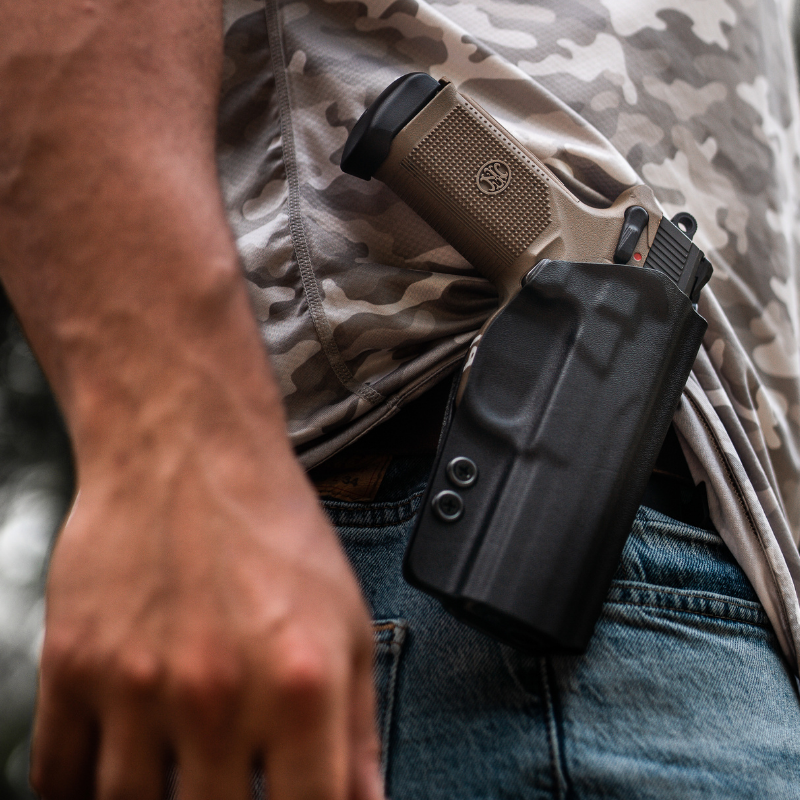
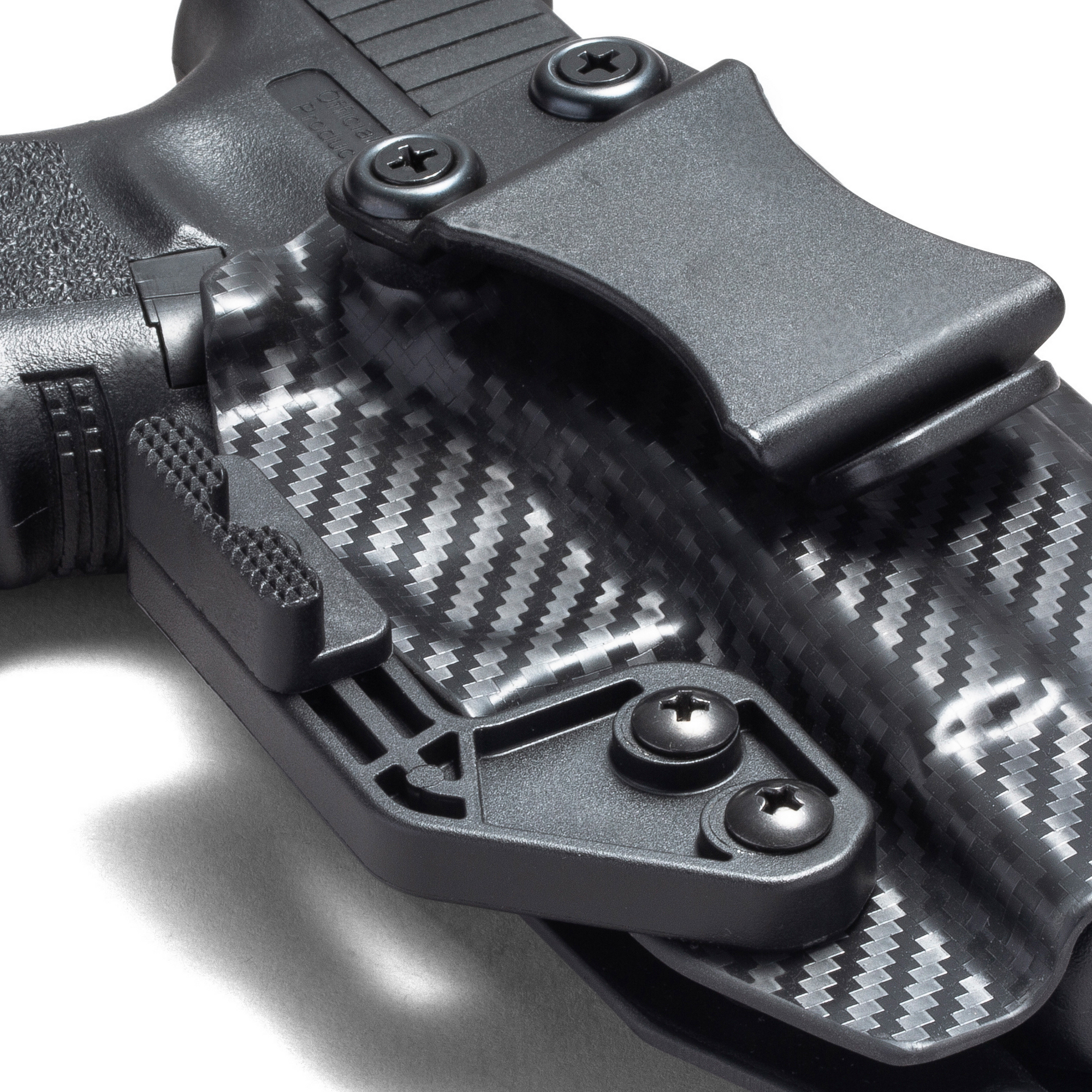
The foundation of safe concealed carry is a quality holster that fits your firearm snugly and covers the trigger guard completely. A good holster should provide secure retention (to hold the gun firmly in place) and allow a smooth, consistent draw when you need it. Avoid cheap, flimsy holsters – “Don’t put a $500 handgun in a $5 holster” as experts often say. Instead, invest in a reputable holster made for your specific gun model, whether it’s an inside-the-waistband (IWB) or outside-the-waistband (OWB) style. Rounded Gear’s own holsters are known for their quality construction and comfort, offering options in both IWB and OWB designs to suit your needs. They are designed to keep your firearm secure during everyday activities while still enabling a quick draw when needed.
A good concealed carry holster should:
Fully cover the trigger guard
Retain the firearm securely during movement
Allow a smooth, consistent draw
Maintain its shape when reholstering
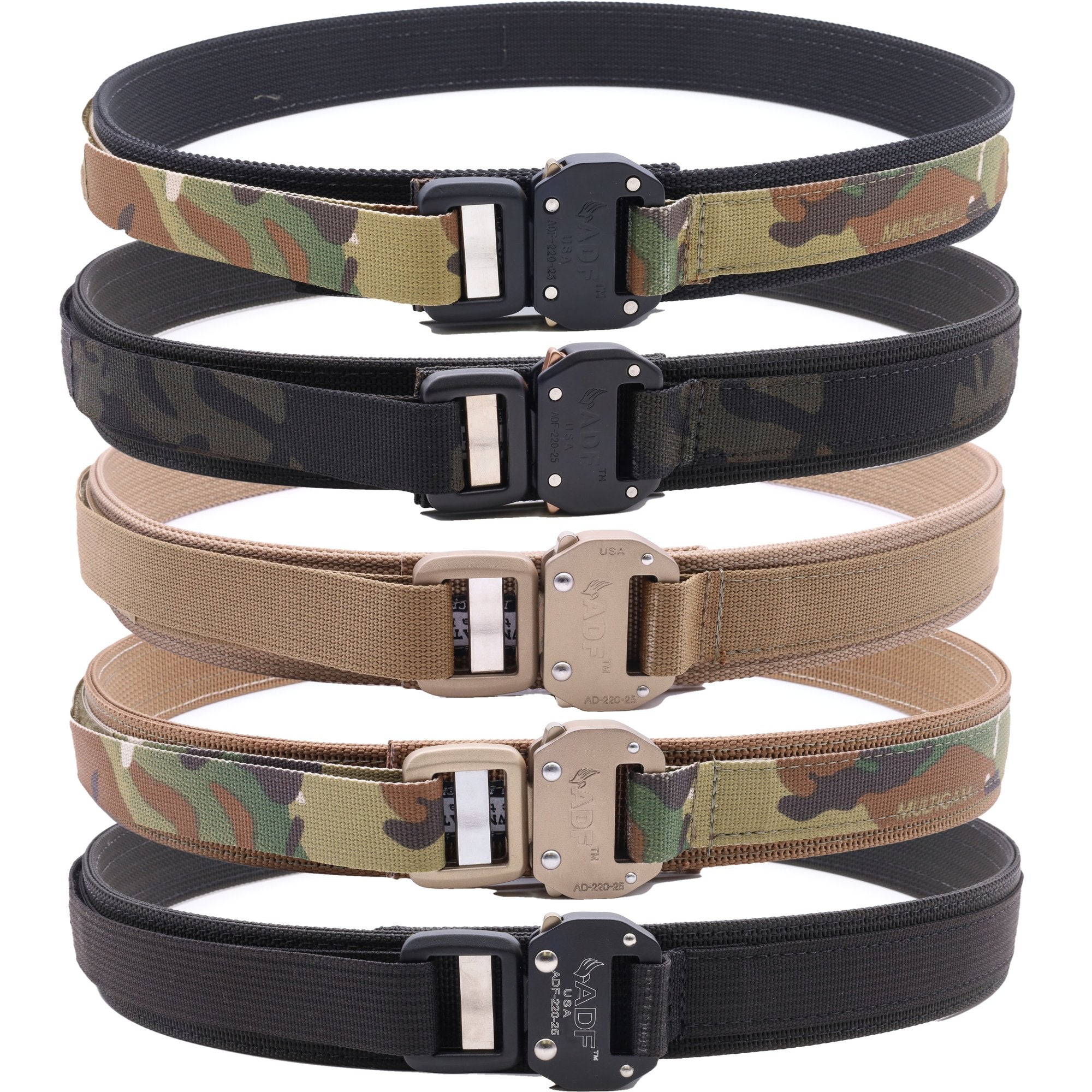
Equally important for concealed carry is a sturdy gun belt. A proper EDC belt is purpose-built to support the weight of your holstered pistol, preventing the holster from sagging or shifting. In fact, many IWB setups require a quality gun belt for stability. A good belt will keep your firearm in position and aid in concealing it effectively. By choosing the right holster and belt, you’ll ensure comfort and confidence in your carry system – if your gear is secure and comfortable, you’re far more likely to carry regularly.
Clothing plays a huge role in successful concealed carry. The goal is to hide your firearm’s presence (no visible bulges or “printing” of the gun’s outline) while wearing normal, comfortable clothes. Opt for outfits that help break up the silhouette of your pistol. For example, wearing a slightly looser shirt or a jacket can cover an IWB holster and prevent the grip of the gun from protruding against the fabric. Patterns or dark colors on shirts are excellent at disguising any minor bulges, whereas thin or light-colored shirts might reveal the outline of the gun more easily. Always do a “mirror check” or a dry-run with your chosen outfit: move around, bend, reach up – see if your firearm remains concealed. If you notice the gun printing or peeking out, adjust your clothing or holster position accordingly. It’s often a process of finding what works best for your body and style.
Beyond choosing the right garments, behave in a way that doesn’t draw attention. A common rookie mistake is constantly tugging at your shirt or touching the holstered gun out of nervousness. Avoid fidgeting with your firearm in public – these movements can tip off observers that you’re carrying. With a good holster (and proper belt as mentioned) and well-chosen clothing, you shouldn’t feel the need to adjust frequently. If you do need to readjust your holster or clothing, do so discreetly in private (for instance, a restroom) rather than in plain view. The key is to blend in and look natural. Overly tactical attire or an overt “concealed carry vest” can sometimes attract the very attention you want to avoid, so unless that’s your preference, just dress normally for your environment. (Tip: Rounded Gear offers apparel like tactical leggings and CCW bags that integrate holsters, which can be useful for specific situations – but for everyday wear, focus on regular clothes that comfortably cover your firearm.)
Helpful concealed carry tips include:
Choose slightly looser shirts or layered clothing
Opt for darker colors or patterned fabrics
Avoid thin or tight materials that cling
Test outfits by bending, sitting, and reaching
Staying aware of your surroundings is a fundamental skill for anyone – especially for those carrying a firearm. Situational awareness means continuously observing the people and environment around you so that you can spot potential signs of trouble early. By being alert, you gain precious time to avoid or respond to threats before they escalate. For example, when out in public, get in the habit of scanning exits, watching the behavior of people nearby, and noting anything unusual. Keeping your head up (not buried in a phone) and periodically checking your “six” (behind you) can make a big difference in spotting danger. Remember, the best fight is one avoided altogether.
Why is this so important for concealed carry? Because being proactive beats being reactive. “Being aware of your surroundings and potential threats allows you to react proactively rather than reactively,” as one training guide notes. If you can identify a possible threat – say, someone acting suspiciously or a tense situation developing – you might be able to steer clear of it or prepare yourself in advance. This can prevent you from being caught off-guard and needing to resort to your firearm at all. Make it a habit whenever you enter a new environment (a parking lot, a store, a gas station) to take a quick inventory: Who is around? Where are the exits? Do I sense anything “off”? This doesn’t mean living in fear or paranoia; rather, it’s adopting a relaxed state of alertness. Many self-defense experts refer to this as living in “Condition Yellow” – calm but observant. By maintaining situational awareness, you not only protect yourself but also reduce the likelihood that you’ll ever need to draw your gun in the first place.
Carrying a concealed firearm is not just a personal choice – it’s also a legal matter. As a beginner, you must educate yourself on the laws that govern concealed carry in your jurisdiction. These laws include where you can and cannot carry (for example, many places prohibit firearms in government buildings, schools, or private businesses that post “no guns” signs), what conditions your permit requires, and the rules for using lethal force in self-defense. Laws can vary significantly from state to state – even city to city – so do the homework for every area you plan to carry in. If you got a state CCW permit, understand that it might have reciprocity with some states but not others. Never assume the laws are the same everywhere; an action that is legal self-defense in one state might be unlawful in another. For instance, some states have “duty to inform” laws (requiring you to inform an officer you’re armed if stopped) and others don’t – know which rules apply to you.
Ignorance of the law is never a valid excuse. A concealed carry holder who accidentally breaks a firearm law can face serious consequences, from losing their permit to criminal charges. Thus, consider taking a legal-focused CCW course or at least reading up on your state’s statutes and use-of-force guidelines. Many organizations provide legal seminars for gun owners, and there are reputable online resources (state police websites, USCCA law summaries, etc.) that compile this information. Key points to learn include: justified use of force (when you can legally draw or fire your weapon in self-defense), castle doctrine or stand-your-ground provisions if applicable, how to handle encounters with law enforcement while carrying, and any required signage to heed.
Also, always carry your permit and photo ID when you are armed. In many states it’s legally required that you have your permit on your person while carrying concealed. If an officer asks, you need to be able to produce that permit. Keeping it in your wallet next to your driver’s license is a good practice, so you don’t forget it. And if you plan to travel out of state, research gun laws for every state you’ll pass through in advance. As one expert aptly puts it: “Never, ever travel to another state with a firearm without knowing their firearm laws as well”. Some states that honor your permit might still have specific restrictions (like magazine capacity limits or prohibited locations) that you must follow. When in doubt, leave the gun at home or locked securely and inaccessible if you’re entering unfriendly legal territory. The bottom line: responsible carry demands knowing the law. Staying informed and compliant not only keeps you out of legal trouble, but it also ensures you can defend yourself within the bounds of the law if the worst happens.
You don’t need to be at the range to sharpen your firearm skills. Dry fire practice – the act of training with your unloaded firearm – is one of the best ways for beginners (and experienced shooters alike) to build competence. Dry firing means you simulate firing: you practice your draw, aim, trigger squeeze, reloads, and even clearing malfunctions without any live ammunition in the gun. Always triple-check that your pistol is unloaded (and no live ammo is in the room) before starting. Once safety is assured, you can carry out a variety of drills in the comfort of your home.
Why dry fire? For one, it allows you to build muscle memory through repetition. Every time you rehearse drawing from concealment, acquiring your sight picture, and pressing the trigger smoothly, you are training your body and mind to do it more efficiently. “Dry fire drills help your body memorize movements like drawing from concealment, finding your sight picture, and reholstering – the more you repeat, the smoother it gets,” as one concealed carry resource notes. Over time, actions like your drawstroke or aligning your sights will become second nature. Dry fire is also fantastic for improving your trigger control. With no recoil or loud bang to anticipate, you can focus on steadily pressing the trigger without jerking. This translates to better accuracy when you do shoot live rounds.
Another big advantage: dry practice is free and convenient. You’re not using up ammunition (which saves money) and you don’t have to travel to a range. You can do a few minutes of practice every day or a few times a week, and this consistency will yield significant improvements. Set up a routine – for instance, practice drawing and firing at a light switch or a safe target on the wall, or use a laser dry-fire training cartridge for feedback on your aim. You can also practice reloads, or scenarios like responding to a potential threat from different angles in your house. All of this in a safe, controlled environment builds confidence in your handling skills.
Keep in mind: safety is paramount during dry fire. Even though you “know” the gun is unloaded, always adhere to the strict safety rules (more on those below). Never dry fire towards anything you can’t afford to destroy; use a wall that would stop a bullet just in case. And when you’re done practicing, immediately re-load only when you intend to and mentally “switch off” training mode. With disciplined use, dry firing will greatly accelerate your learning curve as a new concealed carrier. It’s a secret that top shooters use – and it’s just as useful for beginners wanting to safely hone their skills.
While dry fire is immensely helpful, nothing fully replaces the experience of live fire training. Regular visits to the shooting range will reinforce your skills under the recoil and stress of real ammunition. Make it a goal to practice live fire on a consistent basis – whether that’s once a week, twice a month, or at least some schedule you can maintain. Live-fire practice lets you verify that your shooting fundamentals hold up when the gun actually goes bang. It also helps you get used to the sound, recoil, and muzzle flash in a controlled setting, so you’ll be less startled by them if you ever have to fire in self-defense.
When you go to the range, make your practice purposeful. Don’t just punch holes in paper without a plan. Work on drawing from concealment (if the range allows holster draw practice), work on acquiring your sights quickly, and practice putting follow-up shots on target. Focus on accuracy first, then gradually increase speed as you improve. Incorporate various drills: shoot at different distances, practice shooting one-handed (both dominant and support hand), and try shooting from behind cover or at multiple targets if possible. The more well-rounded your practice, the more prepared you’ll be for real-world scenarios. Also consider practicing defensive scenarios – for example, a quick close-range burst followed by a retreat to cover, etc., always keeping safety in mind.
In addition to solo practice, seek professional training early on. A structured concealed carry or defensive handgun course taught by a certified instructor is invaluable for beginners. In these courses, you’ll learn not only marksmanship but also how to draw safely, how to deal with malfunctions, use of cover, and legal aspects of self-defense. “Proper training is crucial for those carrying concealed – enroll in a comprehensive CCW course covering firearm safety, shooting fundamentals, and self-defense tactics,” advises one expert guide. Good instructors will correct bad habits and instill confidence, which is hard to get on your own. After your initial class, consider more advanced training down the line (such as scenario-based or force-on-force training) to continue building skills.
Finally, make training realistic and include your carry gear. Whenever you practice, use the same holster, belt, and concealment method that you carry with daily. This way, you become proficient with your actual setup. Practice drawing from under your cover garment; practice re-holstering carefully; practice with your carry ammunition occasionally to see how it functions and feels. Some experts recommend at least one range trip per month as a baseline, but tailor that to your schedule and resources. The key is consistency – shooting is a perishable skill, and regular practice will keep you sharp and confident. The combination of ongoing dry fire at home and live fire at the range will make you a well-prepared concealed carrier who can trust their abilities if an emergency arises.
Safety isn’t just one tip – it’s the overarching principle behind everything you do with firearms. Whether you’re at home dry firing, at the range, or carrying loaded in public, the Four Fundamental Rules of Gun Safety must be obeyed at all times. These are simple to learn, yet critical to follow. They are:
Always keep your firearm pointed in a safe direction. In practice, this means never let your muzzle cover (point at) anything you aren’t willing to destroy. If you religiously keep the gun pointed in a safe direction, even an accidental discharge won’t harm anyone. Be mindful of where your pistol’s barrel is aimed during holstering, drawing, or handling at home.
Treat every gun as if it’s loaded. Even if you believe a firearm is unloaded, double-check. And then still act as though a round is chambered. This mentality prevents careless mistakes. For example, people who assume a gun is unloaded might do unsafe things; treating it as loaded enforces caution (like not pointing at people or looking down the barrel).
Keep your finger off the trigger until you’re ready to shoot. This rule guards against negligent discharges. Never rest your finger on the trigger or inside the trigger guard until your sights are on target and you have decided to fire. Instead, index your trigger finger straight alongside the frame of the gun. This way, even if you’re startled or lose balance, you won’t unintentionally squeeze the trigger.
Be sure of your target and what’s beyond it. Bullets can travel through targets (or miss and go beyond), so you must always know what you’re shooting at and what lies behind it. In self-defense, this means you must identify a threat properly and be aware of bystanders or thin walls behind the target. You are accountable for every round you fire.
Memorize these four rules and enforce them 100% of the time. They work in conjunction to provide layers of safety. For instance, if you accidentally violate one rule (say your finger slips to the trigger), the other rules (like keeping the gun pointed safely) can still prevent tragedy. As a concealed carrier, safe gun handling is non-negotiable – you owe it to yourself and those around you to be a safe, responsible gun owner. Make these rules your reflexive habits. Every time you handle your pistol – holstering, unloading, cleaning, training – recite the rules mentally. This mindset will drastically reduce the chance of accidents. Remember, there’s no “undo” button for a firearm mishap, so prioritize safety above all.
(A quick note: Modern pistols are very safe when handled properly. Many have drop-safeties and other features to prevent firing unless the trigger is pressed. This means if you follow the rules – especially keeping your finger off the trigger and pointed in a safe direction – the gun will not fire on its own. Trust in the safety design, but never become complacent in your handling.)
A concealed carry weapon is a tool that your life may depend on – so keep that tool in top working condition. Regular maintenance of your firearm is essential for reliability. After firing a significant number of rounds (for example, after each range session), you should clean and lubricate your handgun according to the manufacturer’s instructions. Most modern pistols are easy to field strip: remove the magazine, double-check the chamber is empty, then disassemble the slide, barrel, and recoil spring. Wipe away carbon build-up, lightly oil the moving parts, and reassemble. This routine cleaning keeps the action smooth and prevents malfunctions caused by dirt or fouling. It’s also a good time to inspect for any unusual wear or damage. Follow your gun’s manual for specifics on lubrication points and cleaning frequency – some carry guns can run hundreds of rounds between cleanings, but a quick wipe-down and oil now and then helps ensure it will go bang when needed.
In daily concealed carry, your firearm is exposed to sweat, lint, and movement, which means you should give it a quick check often. Wipe off sweat (which can cause corrosion, especially on steel parts) and periodically unload and brush out any lint from the barrel or holster. Many carriers do a weekly function check: unload the gun (ammo in another room), then test the action, trigger reset, and maybe snap on some dummy rounds to ensure smooth feeding and ejection. This gives peace of mind that everything is in working order. Also, rotate your carry ammo occasionally. The rounds in your magazine can get chambered repeatedly or collect oil/dirt; it’s wise to shoot those carry rounds at the range every few months and refill the magazine with fresh ammo.
Don’t forget to maintain your holster and supporting gear as well. Holsters, especially leather ones, may need cleaning or conditioning per manufacturer guidance. Kydex or polymer holsters should be checked for cracks or loose screws. If your holster has retention screws or adjustable clips, tighten them as needed so they don’t back out over time. Inspect your gun belt for any wear or stretching that might reduce support. If you carry a spare magazine in a pouch, ensure that pouch retains the mag securely. Essentially, give your EDC (Every Day Carry) setup a once-over on a regular basis. The last thing you want is to discover an issue (like a broken holster clip or a dirty firing pin) when you need to defend yourself. By staying on top of maintenance, you’ll have confidence that your equipment will perform as expected. It’s a small price of time to pay for the increased reliability and longevity of your firearm. As the saying goes, “Take care of your gear, and it will take care of you.”
When you first start carrying concealed, it might feel a bit strange or uncomfortable – a weight on your hip, the holster pressing against you, the constant awareness that “I have a gun on me.” These feelings are normal for newcomers. The best way to overcome them is by carrying your firearm consistently. If you only carry once in a while, you’ll likely always feel like it’s foreign and you’ll be prone to fidget or worry about it. By carrying as part of your daily routine, you’ll acclimate to the sensation and it will become a natural part of you, like your wallet or phone that you check without thinking. “Carrying your firearm consistently is crucial for developing comfort and familiarity,” one training article advises. The more regularly you carry (in legal environments), the quicker you’ll forget that uncomfortable newness.
Make it a habit to put on your carry gun whenever feasible – obviously respecting restricted areas – so that it’s just another part of getting dressed in the morning. Over time, you’ll find your awareness settles; you won’t constantly think everyone knows you’re armed. This consistency also means you’re more likely to have the gun if, heaven forbid, you ever need it. A firearm left at home or in the car does you no good in an emergency. Many self-defense incidents are spontaneous and unexpected (that’s why we carry in the first place), so having your gun on you as much as possible is ideal for preparedness.
As you carry daily, pay attention to comfort issues and address them rather than giving up. If a holster pokes you when sitting, experiment with placement or cant (angle), or try a different holster style. If the weight is pulling your pants, get that sturdier belt or a lighter carry gun. There are many solutions available – from foam wedges to pad a holster, to alternate carry positions – so don’t be discouraged. The goal is to reach a point where carrying concealed is comfortable for you, so you’re not tempted to leave the gun behind. It might also help to carry at home for extended periods (in a safe condition) when you first start, so you get used to moving around with it, and even family members can give feedback if they notice any printing. Through regular practice and wear, you’ll soon find you feel “naked” without your firearm on your hip. That is when you know carrying has become second nature – and that’s a good thing for your safety.
Our final tip is perhaps the most important intangible: cultivate the proper mindset as a concealed carrier. Owning and carrying a firearm for self-defense is a tremendous responsibility. It requires not just physical preparedness, but mental and ethical preparedness too. First and foremost, understand that your firearm is meant for life-or-death emergencies only – it is a last-resort tool. You should carry with the resolve that you will only draw your weapon to protect innocent life when there are no other options. Part of this mindset is actively avoiding conflict whenever possible. As the saying goes, “An armed society is a polite society.” Be the calmest, most level-headed person in the room because you know you carry deadly force on your hip. Don’t engage in ego contests on the road, don’t escalate shouting matches, and don’t go looking for trouble. “Hold yourself to a higher standard, be polite, and avoid unnecessary confrontations. Your firearm is your LAST RESORT – using it will change your life,” advises one concealed carry guide. These words ring true. If you can walk away from a potential fight, do so. If you can de-escalate by apologizing or simply leaving, do it. The best outcome is never having to pull your gun at all.
That said, having a defensive mindset also means being prepared to act decisively if you must. If a threat to life truly leaves you no choice, you need the will and readiness to use your firearm effectively. Hesitation in such moments can be catastrophic. This doesn’t mean itching for a fight – it means mentally rehearsing “what would I do if…” scenarios so that if the unthinkable happens, you’ve at least visualized your response. It also means coming to terms with the gravity of using deadly force and ensuring you’re emotionally prepared for potential consequences (legal, psychological, etc.). A common question from beginners is, “Should I carry with a round in the chamber?” From a mindset perspective, the answer for most is yes – if you are carrying for self-defense, you likely won’t have time to rack the slide under attack. Modern handguns are designed to be carried safely with one in the chamber (internal safeties prevent accidental discharge). The only thing preventing a negligent shot is your trigger discipline. “Most modern firearms are made to carry one in the chamber safely... the only fear you should have is if you have no trigger discipline,” one expert notes. In other words, trust your training and carry ready to go. However, if you truly feel uncomfortable about it, get more training and gradually ease into it – never carry beyond your comfort and skill level. The ultimate goal is that your mindset is confident, not cocky; you are prepared for threats but not looking for them, and you carry your gun as a tool of protection you hope never to use.
Finally, part of a responsible mindset is continuous learning and improvement. Stay humble and acknowledge you’re always a student – laws change, new techniques emerge, and skills can be refined. Engage with the concealed carry community: read articles (like you’re doing now!), take refresher courses, maybe join a local shooting club or online forum for support. This will keep you sharp and responsible over the long term. By combining all the above tips with the right mindset, you’ll be well on your way to being a conscientious and capable concealed carrier.
Entering the world of concealed carry is a significant step, and these ten tips provide a roadmap for beginners to do it safely, legally, and confidently. We covered the essentials: choosing quality gear (holsters, belts, clothing) that make daily carry feasible, practicing diligently both with dry fire and live fire, and never forgetting the bedrock of firearm safety. Equally important, we discussed the mental aspects – from staying aware of your environment to knowing the law and carrying yourself with the responsibility that a concealed weapon demands. If you implement these practices, you’ll find that carrying a concealed firearm becomes a natural part of your life rather than an uneasy experiment.
Always remember that concealed carry isn’t just a right – it’s a responsibility. Your firearm is there to protect life, and with that comes the duty to train, to stay informed, and to act wisely. Continue seeking knowledge and honing your skills. Consider investing in quality accessories (like those from Rounded Gear) that can enhance comfort and security as you carry – a good holster or gun belt can make a world of difference on a long day. Over time, you’ll gain confidence in your abilities and your equipment. The goal is to be prepared for the worst while hoping for the best. By following the tips outlined here, you will be well-prepared to defend yourself and your loved ones responsibly, should the need ever arise. Stay safe, carry smart, and welcome to the concealed carry community!
There isn’t a one-size-fits-all holster, but beginners should look for a holster that is secure, comfortable, and made for their specific handgun. Many new carriers start with an inside-the-waistband (IWB) holster because it offers excellent concealment by tucking the gun close to the body. Kydex holsters are popular as they are rigid and molded to the firearm, providing good retention and completely covering the trigger guard for safety. Leather holsters can be comfortable, though they may trade a bit of retention for comfort as they break in. Also, consider the holster’s position – appendix carry (front of the waist) is common for quick access, while 3-4 o’clock on the hip is a traditional spot that many find comfortable. Key features to look for include: trigger guard coverage, adjustable retention (if available), and a holster mouth that stays open for easy re-holstering. Beginners should avoid universal “one size fits all” fabric holsters, as these often lack proper retention and can shift position. It’s worth investing in a reputable brand; for example, Rounded Gear offers holsters tailored to specific gun models, which can be a great starting point. Lastly, don’t forget a quality gun belt to pair with the holster – this will keep the holster stable and improve overall comfort and draw consistency.
You should aim to practice regularly with your carry gun, both through dry fire at home and live fire at the range. A good rule of thumb is to dry fire a few times a week (even just 10 minutes of practice can be effective) and do live fire practice at least once a month. Dry firing is easy to do at home and will keep your skills sharp – practice your draw, sight alignment, and trigger press routinely. Live fire confirms those skills under recoil. Try to shoot at least 50-100 rounds per range session if you can, focusing on the fundamentals and some defensive drills. Consistency matters more than raw frequency; for example, practicing 20 minutes every week is better than a two-hour session once a year. If you’ve just started carrying, consider doing some intensive practice initially (say, weekly range trips for the first couple of months) to build confidence. After that, a maintenance schedule like monthly range visits can suffice, supplemented by dry fire. Always prioritize quality over quantity in practice – 30 mindful shots where you really focus on technique are more beneficial than 100 rushed shots. And periodically, practice with your carry ammo (the defensive hollow points you load in your gun) – maybe a magazine or two every few months – to ensure your gun functions well with it and to feel its recoil, which can differ from cheaper practice ammo. Regular practice not only maintains your shooting proficiency, it also mentally ingrains the habits that will help you stay calm and effective should an emergency occur.
While ultimately a personal decision, carrying with a round in the chamber is highly recommended for effective self-defense. In a violent encounter, you may have only split-seconds to react, and having to rack the slide (to chamber a round) would slow you down significantly – if you even have a free hand to do it. Most modern concealed carry handguns are designed to be safely carried with a round chambered. They have multiple built-in safety features (firing pin blocks, trigger safeties, drop safeties, etc.) to prevent the gun from firing unless the trigger is pressed. Therefore, the biggest safety factor is you, the user. If you keep your finger off the trigger and follow the other safety rules, the gun will not accidentally discharge simply because it’s loaded. Many instructors say carry how you train – and virtually all defensive handgun training is done assuming a loaded chamber.
That said, it’s understandable for beginners to feel nervous about this. If you’re uncomfortable, you can ease into it: for example, carry around the house with the gun loaded but unchambered at first, then progress to chambered once you’re confident in your holster and handling. You could also practice chambering and dry firing to get used to the mechanics. But ultimately, for maximal readiness, carrying “condition one” (round in chamber) is advisable – it eliminates an extra step under stress and could save precious time. Importantly, choose a holster that completely covers the trigger guard (to reduce any risk of something snagging the trigger) and don’t holster the gun while your finger is on the trigger. If you adhere to those practices, having a chambered round is no more dangerous than an unchambered gun. In summary, it’s not legally required to carry with a round chambered, but from a tactical standpoint it’s considered best practice so that you can respond instantly to a threat. As your confidence and training grow, you’ll likely find that carrying with a chambered round becomes the norm for you. Stay safe!
Ben Jimenez - Co-Founder & CEO
Ben is the co-founder of Rounded Gear (formerly Rounded Gear), an avid gun owner, and proponent of EDC. He started the company back in 2014 after his daughter was born. He decided that it was time to purchase a gun to protect his growing family. When he struggled to find a decent left-handed kydex holster for his EDC, he decided to make himself one instead. From making that first holster back in 2014 to a state of the art manufacturing facility in Jacksonville, Florida, the rest, as they say, is history.


Comments will be approved before showing up.










Randy Hale
March 19, 2026
Having had a FL CCWP for over 35 years, and having experience in law enforcement (many years ago). While searching for information on a specific holster accessory, I ran across the beginners guide in your FAQ. Putting aside my years of experience of carrying, I took the time to read it.
I want to thank you for posting an article that wasn’t written to sell a product, but to focus more on the real life reasons, and the consequences of having to carry, and the fact that using your weapon can potentially cause the loss of life (justified, or not). We as gun owners must understand the responsibility we have accepted.
The guide you posted has convinced to be me a First Choice customer for your company.