Your Cart is Empty



If you carry a firearm for self-defense, you need to accept a simple reality: mechanical devices can fail. Whether it’s a high-end custom 1911 or a bone-stock Glock, eventually, you will experience a malfunction. In a controlled environment like a flat range, a "jam" is a minor annoyance. In a defensive encounter, it is a life-threatening emergency.
Knowing how to clear common handgun malfunctions isn't just a "good-to-have" skill; it’s a fundamental part of responsible gun ownership. The industry standard for resolving most minor stoppages is the Tap-Rack-Bang (or Tap-Rack-Reassess) drill.
This guide breaks down why malfunctions happen, how to execute the clearance drill, and when you need to stop and move to more advanced troubleshooting.
Before we get into the "how" of fixing the problem, you need to understand the "why." Most handgun malfunctions fall into one of three categories: ammunition issues, magazine issues, or shooter error.
The Tap-Rack-Bang drill is the immediate action you take when you pull the trigger and the gun goes "click" instead of "bang." It is designed to solve "Type 1" and "Type 2" malfunctions quickly without requiring you to look at the gun.
The first step is to ensure the magazine is fully seated. Often, a shooter might accidentally hit the magazine release, or they may not have slammed the magazine home during a reload.
How to do it: Firmly strike the bottom of the magazine with the heel of your support hand. You aren't "tapping" it gently; you are seating it with authority. Maintain your shooting grip with your strong hand and keep your muzzle pointed downrange at the target.
Once the magazine is seated, you need to clear whatever is in the chamber and load a fresh round.
How to do it: Reach over the top of the slide with your support hand. Grip the slide firmly: using the rear serrations: and pull it back as far as it will go. Release the slide instantly. Do not "ride" the slide forward. Let the recoil spring do its job to slam the slide into battery. This action should eject a bad round or a stuck casing and strip a fresh round from the seated magazine.
In a training environment, this was traditionally called "Bang" to emphasize getting back into the fight. However, modern instructors often prefer "Reassess."
How to do it: Bring the gun back into your sight picture. If the threat is still there and you are justified in firing, pull the trigger. If the situation has changed, you now have a functional firearm ready to go, but you don't necessarily have to fire.

Caption: A visualization of the 'Rack' phase, showing the support hand pulling the slide to the rear while the muzzle remains pointed safely toward the target.
This drill is incredibly effective for the two most common types of stoppages.
You pull the trigger and hear a click. This is usually caused by a "dud" round (bad primer) or a magazine that isn't seated, meaning there was no round in the chamber to begin with. The Tap-Rack-Bang fixes this by seating the mag and cycling a fresh round in.
This happens when a spent casing gets caught in the ejection port, sticking up like a stovepipe. By racking the slide vigorously, you sweep that casing out of the way and allow the next round to enter the chamber.
If you perform a Tap-Rack-Bang and the slide doesn't go forward, or it feels "mushy," you likely have a Double Feed. This is when a spent casing stays in the chamber and the gun tries to feed a new round on top of it.
Caution: Doing a Tap-Rack-Bang on a double feed usually makes the problem worse by wedging the rounds even tighter.
To clear a double feed:
For more advanced drills and visual walkthroughs, check out our Instructional Videos.

There is one "malfunction" where you should NEVER use the Tap-Rack-Bang method: the Squib Load.
A squib load occurs when a round has enough primer force to push the bullet into the barrel, but not enough gunpowder to push it out of the barrel. If you hear a "pop" instead of a "bang" and notice significantly less recoil, STOP IMMEDIATELY.
If you perform a Tap-Rack-Bang and fire another round behind a stuck bullet, your barrel will likely explode, causing catastrophic damage to the gun and potentially severe injury to your hands and face. If you suspect a squib, keep the gun pointed in a safe direction, wait 30 seconds, then unload and check the bore for obstructions.
You cannot think your way through a malfunction in a high-stress situation. It must be muscle memory.
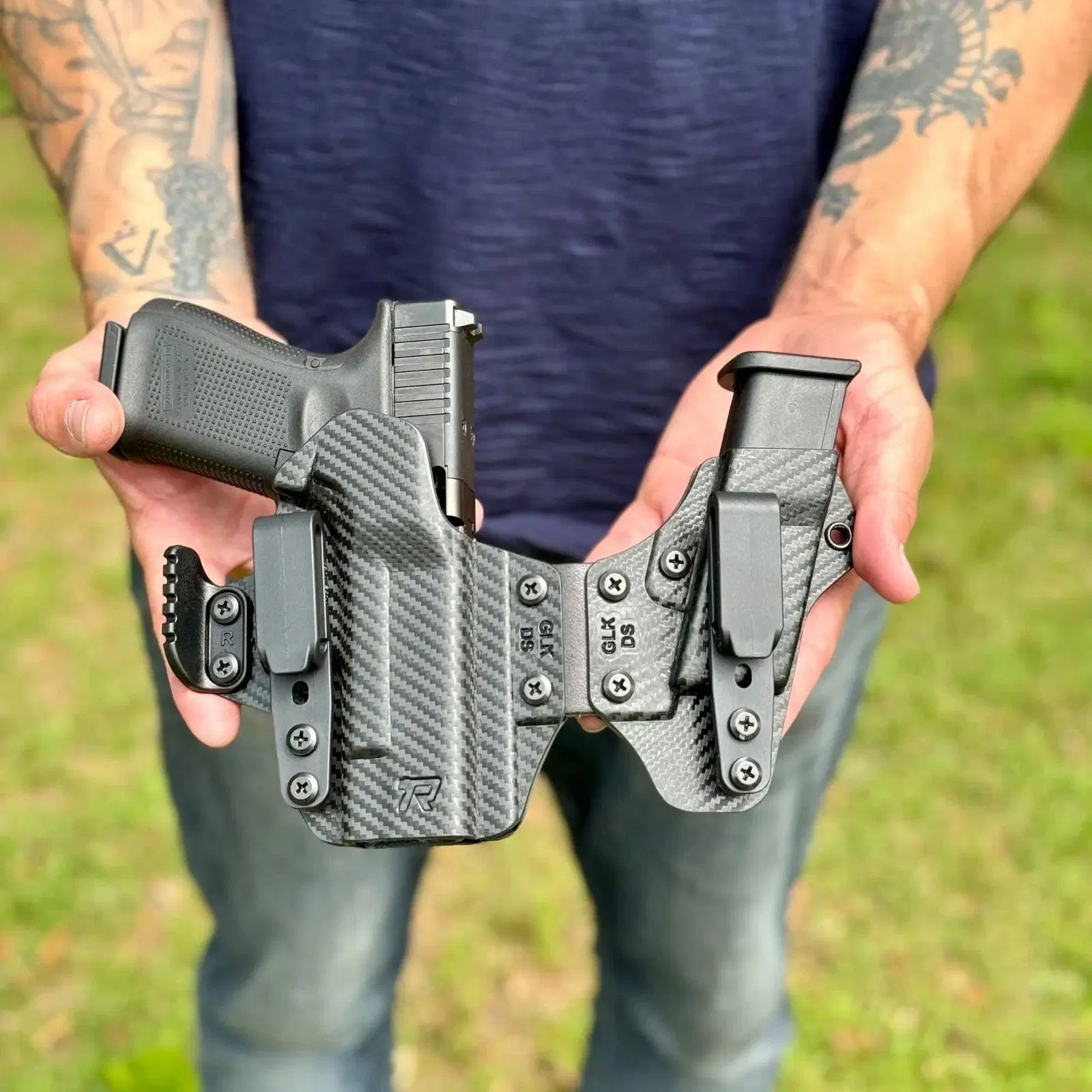
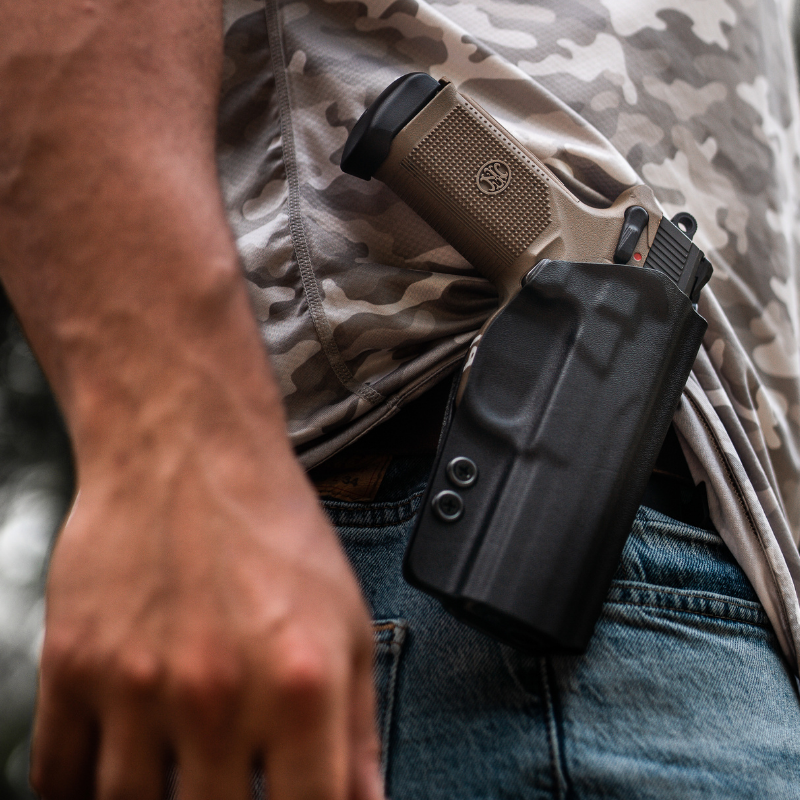
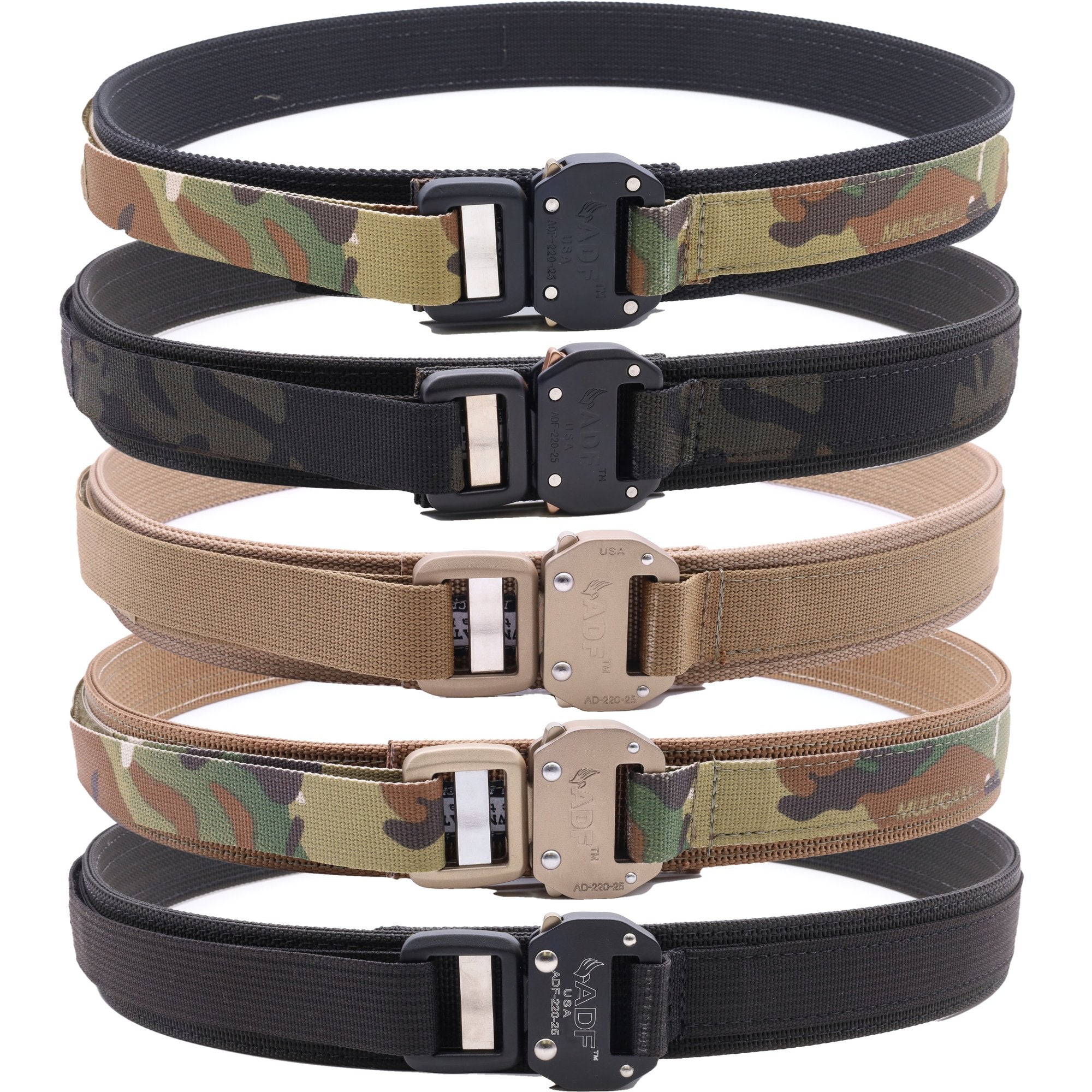
Reliability starts with your gear. While no holster can prevent a bad primer, the way you carry impacts how you interact with your firearm. A floppy belt or a poorly fitted holster can interfere with your draw or your grip, leading to the "limp wristing" issues mentioned earlier.
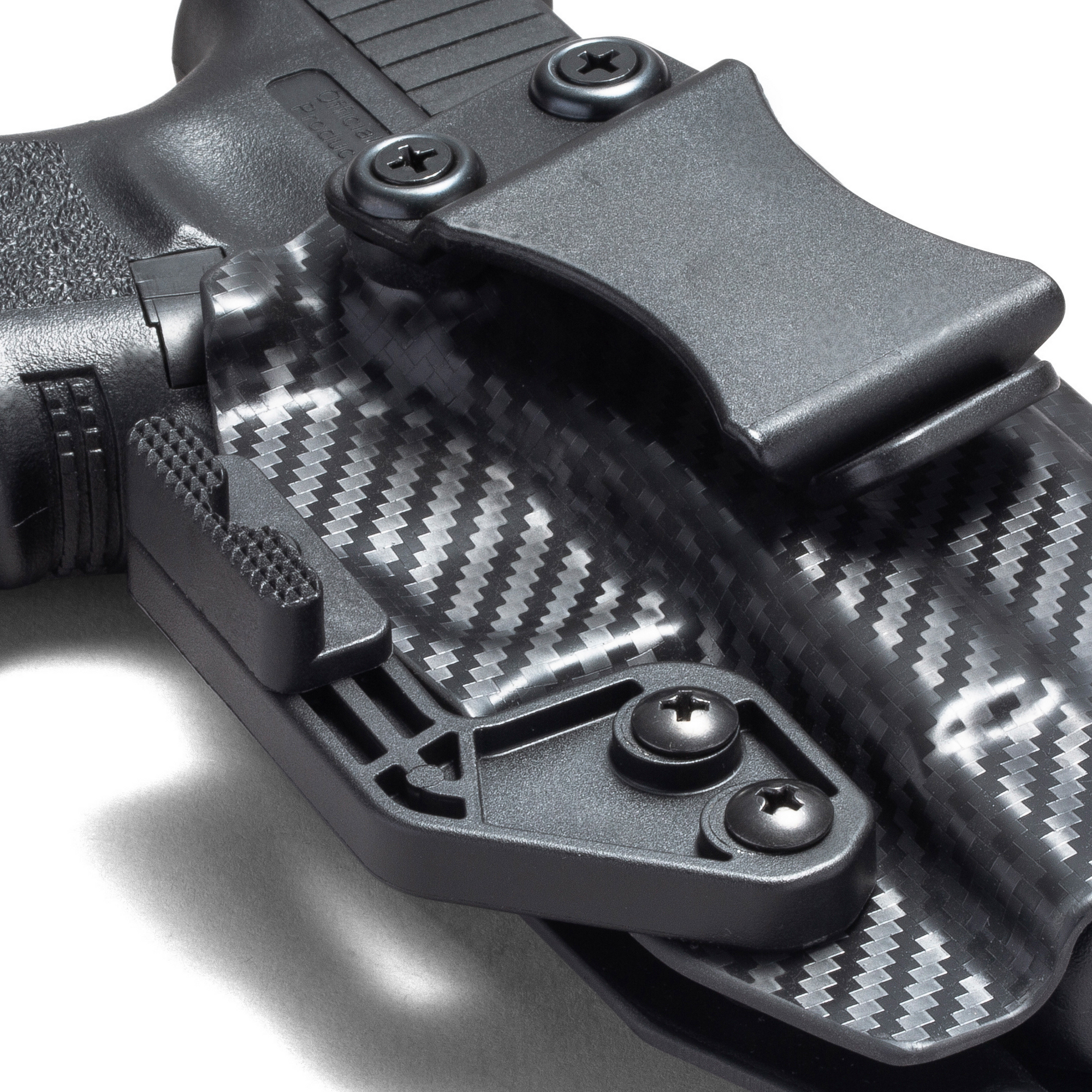
Investing in a solid Kydex IWB Holster and a dedicated gun belt ensures that your firearm is always in the same position, allowing for a consistent, firm grip every time you draw.
A handgun malfunction is a test of your training. If you've put in the work, a "click" is followed immediately by a "Tap-Rack-Bang," and you’re back in the fight in under two seconds. If you haven't trained, that "click" might be the last thing you hear.
Practice the drill. Use dummy rounds. Maintain your firearm. And most importantly, carry your gear in a way that allows you to access it and manipulate it effectively under pressure.
If you’re looking to sharpen your skills further, consider enrolling in our Concealed Carry Video Training Course to get professional instruction on everything from basic handling to advanced defensive tactics.

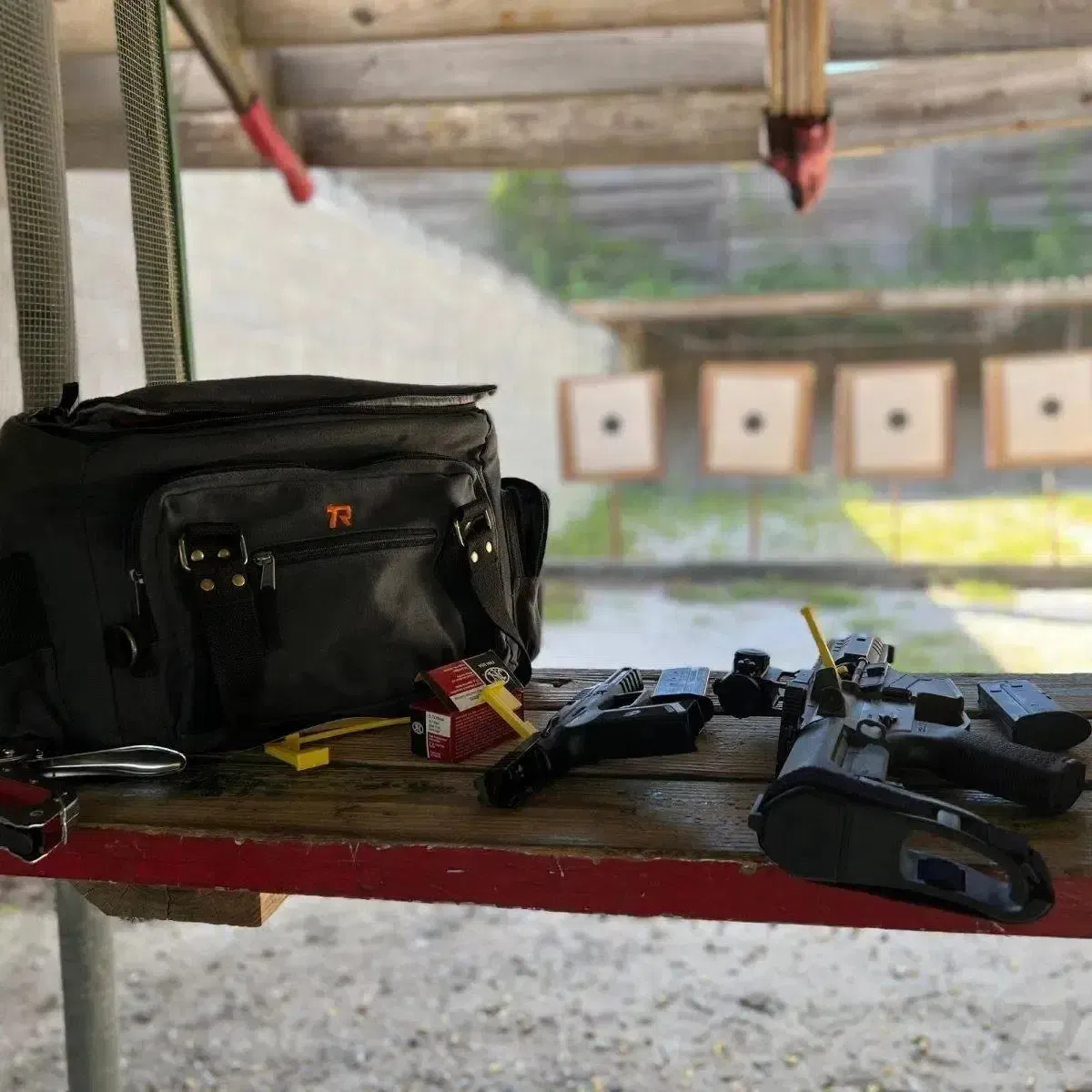
Caption: A professional range setup with Rounded by Concealment Express gear, emphasizing the importance of consistent practice and reliable equipment.
Comments will be approved before showing up.