Your Cart is Empty



You just dropped several hundred dollars on a high-quality handgun. You spent another chunk of change on a premium Kydex holster. You’ve put in the hours at the range. But if you’re threading that top-tier setup through a standard leather belt you bought at a department store five years ago, you’re setting yourself up for failure.
In the world of everyday carry (EDC), the belt is the most underrated piece of gear. Most people treat it as an afterthought: something that just keeps their pants up. But when you add the weight of a firearm, spare magazines, and a medical kit, your belt stops being a fashion choice and starts being a piece of safety equipment.
At Rounded by Concealment Express, we see it all the time: people struggling with comfort or concealment, only to realize their "sturdy" work belt is the actual culprit. Here is why a dedicated gun belt is non-negotiable for anyone serious about concealed carry.
A standard belt is designed to hold up the weight of denim or chinos. It is not engineered to support a two-pound concentrated load hanging off one side. When you use a regular belt for EDC, three things inevitably happen:
A dedicated gun belt solves all of this by providing torsional rigidity. It stays flat against your waist, supporting the weight without deforming.
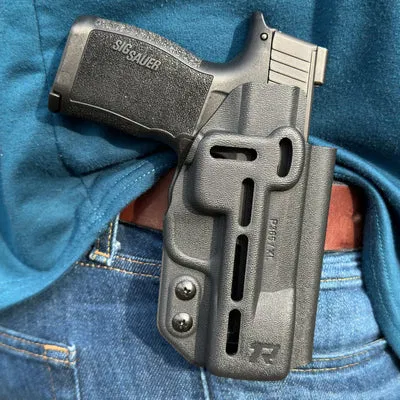
When we talk about concealed carry accessories, the belt is the literal foundation. If the foundation is shaky, the whole system fails.
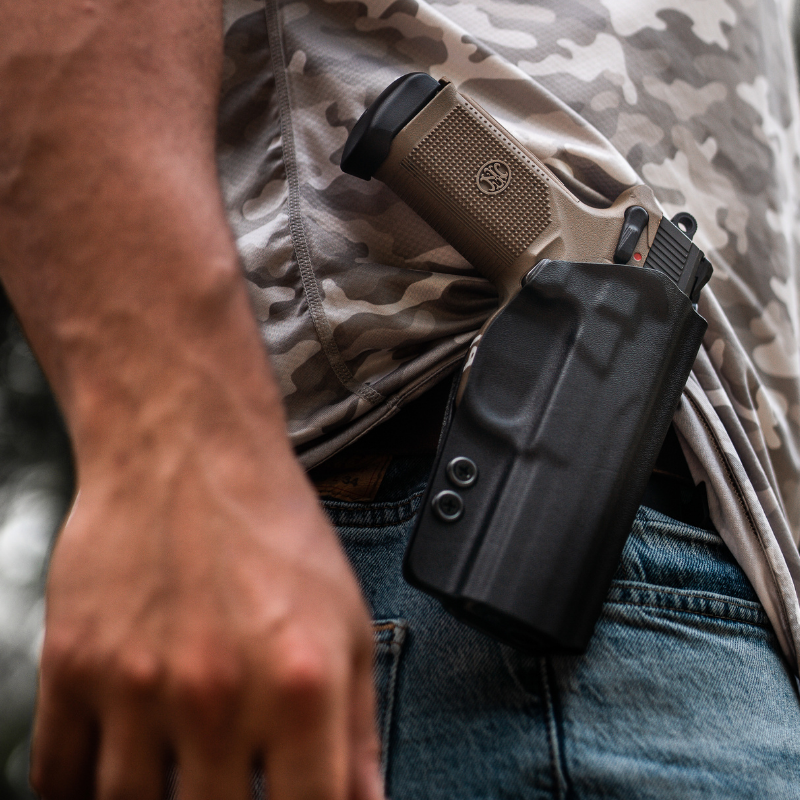
In a self-defense situation, muscle memory is everything. You’ve practiced your draw thousands of times. You expect the grip of your gun to be in the exact same spot every time you reach for it. If your belt sags or shifts throughout the day, that grip might be two inches lower or tilted at a different angle when you actually need it. A reinforced gun belt ensures that your holster stays in the exact same "ride height" and "cant" from the moment you put it on until you take it off at night.
Most modern Kydex holsters rely on a solid "click" for retention. However, that retention is only effective if the holster stays stationary when you pull the gun. If your belt is flimsy, the entire holster might move upward with the gun during the draw stroke. This creates friction and can actually snag the gun in the holster. A stiff belt provides the resistance needed for a clean, crisp draw.

Caption: A side-by-side comparison showing how a reinforced gun belt maintains its shape under weight versus a standard belt.
One of the biggest misconceptions in EDC is that a smaller gun is the only way to reduce "printing" (the outline of the gun showing through your shirt). While gun size matters, belt stiffness matters more.
A proper gun belt acts like a hoop. Because it resists bending, it naturally wants to maintain its circular shape around your waist. This tension works in your favor by pulling the holster and the grip of the firearm tight against your side or appendix.
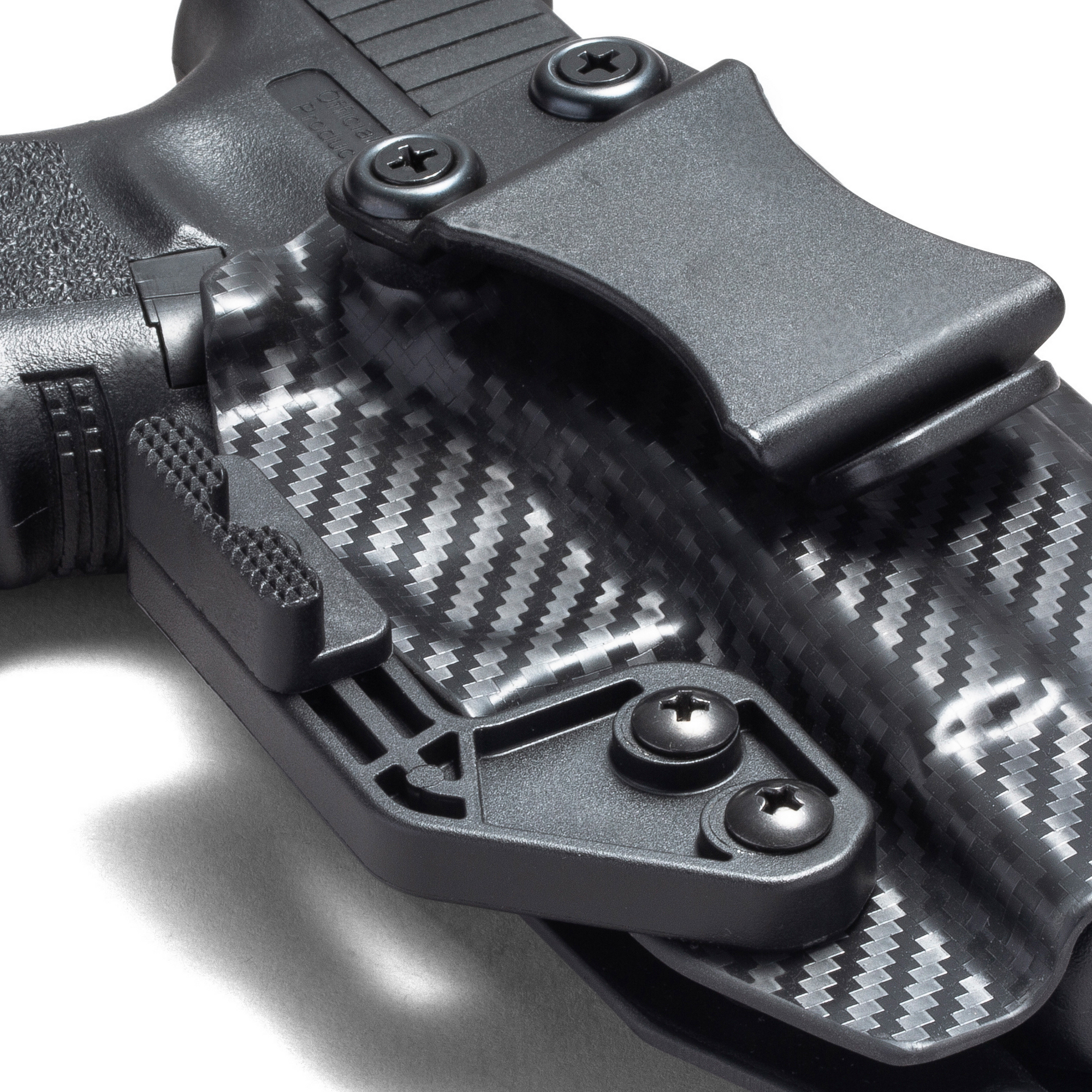
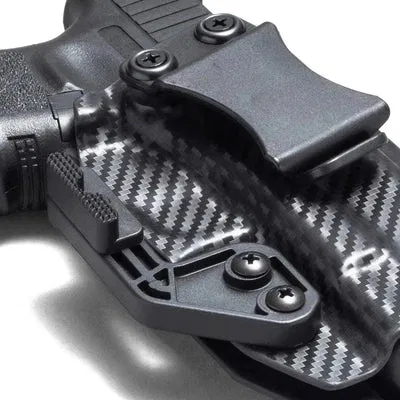
When you use a high-quality IWB holster equipped with a "claw" or "wing," the belt’s rigidity is what allows that claw to function. The claw pushes against the back of the belt, which levers the grip of the gun into your stomach. If the belt is soft, the claw just pushes the belt out rather than pushing the gun in.
"Comfortable carry" isn't an oxymoron. If your setup hurts, you’re going to start leaving your gun in the safe.
Standard belts create "hotspots" because the weight of the gun is concentrated on one small section of your hip. A dedicated gun belt is stiff enough to distribute that weight across your entire waistline. Think of it like the hip belt on a hiking backpack; it takes the load off one specific point and spreads it out.
Furthermore, because a gun belt doesn’t sag, you don't have to cinch it down to the point of cutting off your circulation. You can wear it at a normal, comfortable tightness and let the structural integrity of the belt do the heavy lifting.
Not all "tactical" belts are created equal. When you’re shopping for gun belts, look for these three critical features:
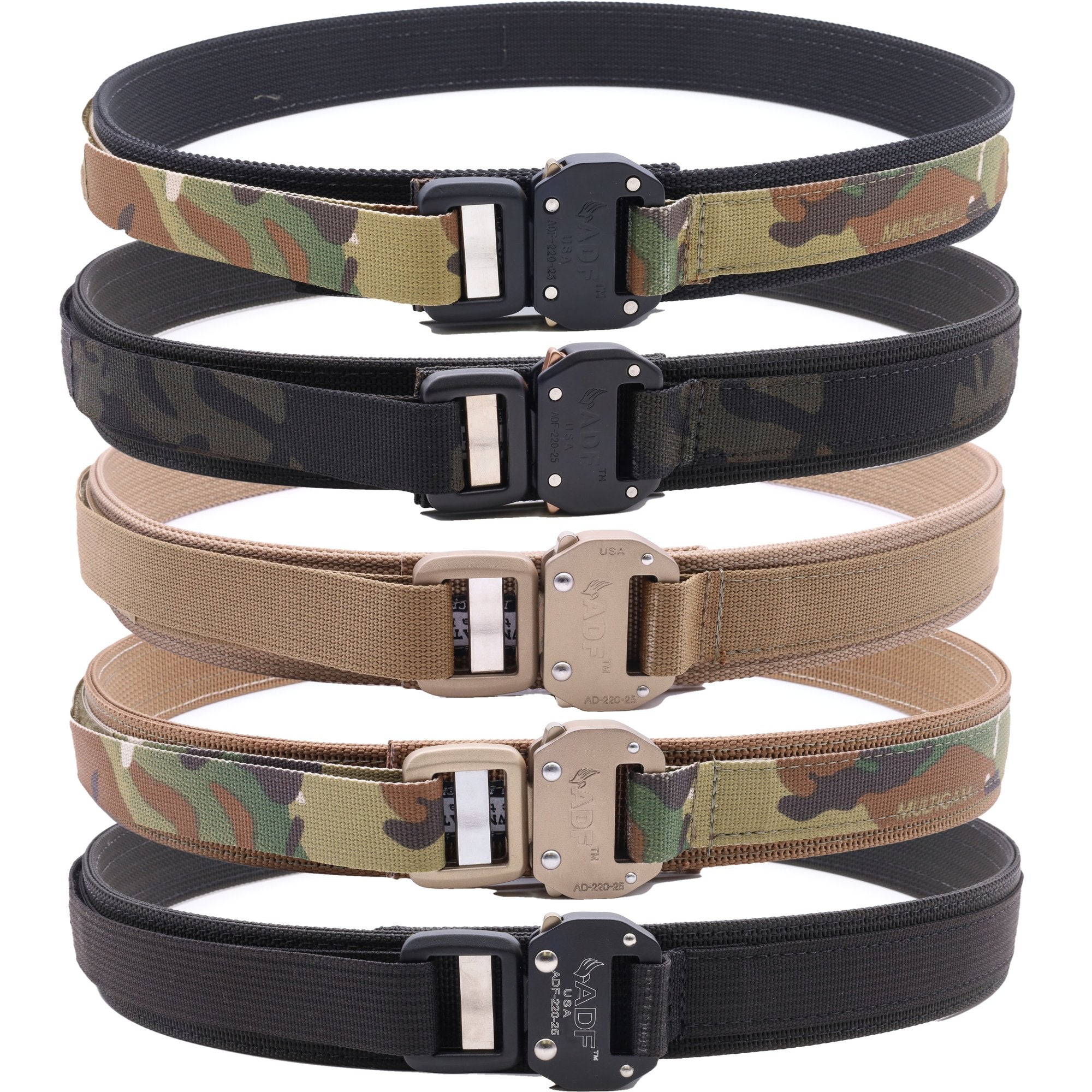
Whether the belt is made of leather or nylon, it needs a core. Many high-end gun belts feature a Kydex or polymer insert sandwiched between layers of material. This provides the "vertical" stiffness needed to prevent sagging while remaining "horizontally" flexible enough to wrap around your waist.
Your waist size changes. It changes based on whether you're carrying IWB or OWB, whether you’ve just had a big lunch, or whether you’re wearing thick winter layers. Traditional belts with holes spaced 1 inch apart often leave you "between sizes": one hole is too loose, and the next is too tight. Look for belts with track systems or infinitely adjustable friction buckles that allow for 1/4-inch adjustments.
If you carry appendix (AIWB), a massive "cowboy" style buckle is your worst enemy. It adds unnecessary bulk right where you’re already trying to hide a firearm. A low-profile, minimalist buckle allows you to shift the buckle to the side or keeps the front of your waistline flat, drastically improving concealment.
A good gun belt is an investment. While a cheap belt might last six months before it’s permanently warped into a "U" shape, a reinforced EDC belt is built to last for years.
If you’re new to this, we recommend starting with our instructional videos to see how different belt and holster combinations work in real-world movements.
You can have the best holster in the world, but without a dedicated gun belt, you're only getting 50% of the performance. A proper belt makes your gun feel lighter, hide better, and stay safer.
If you are serious about your EDC, stop trying to make your dress belt work for a job it wasn't designed to do. Invest in a foundation that supports your gear, your safety, and your comfort.
Ready to upgrade your carry? Check out our full range of holsters and accessories to complete your setup. Don't let a $20 belt be the reason you leave your life-saving equipment at home.

Comments will be approved before showing up.