Your Cart is Empty



If you’ve spent any time in the concealed carry community lately, you’ve noticed a major shift. The traditional "strong-side" carry: tucking your firearm behind the hip at the 4 o'clock position: is no longer the undisputed king. Appendix Inside the Waistband (AIWB) carry has taken over the conversation.
But is appendix carry just a trend, or is it actually a better way to carry? At Rounded by Concealment Express, we’ve seen the demand for appendix carry holsters skyrocket. To help you decide if this method is right for your daily setup, we’re breaking down the mechanics, the benefits, and the very real challenges of carrying up front.
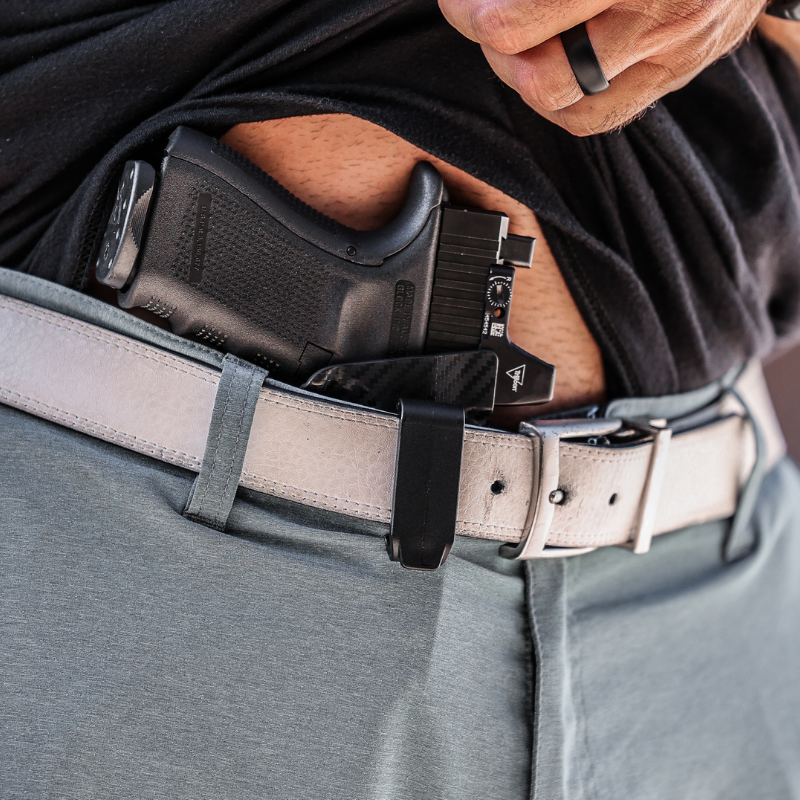
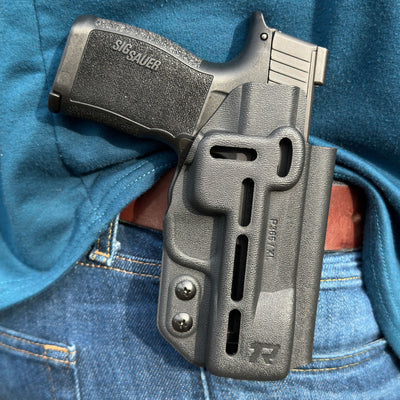
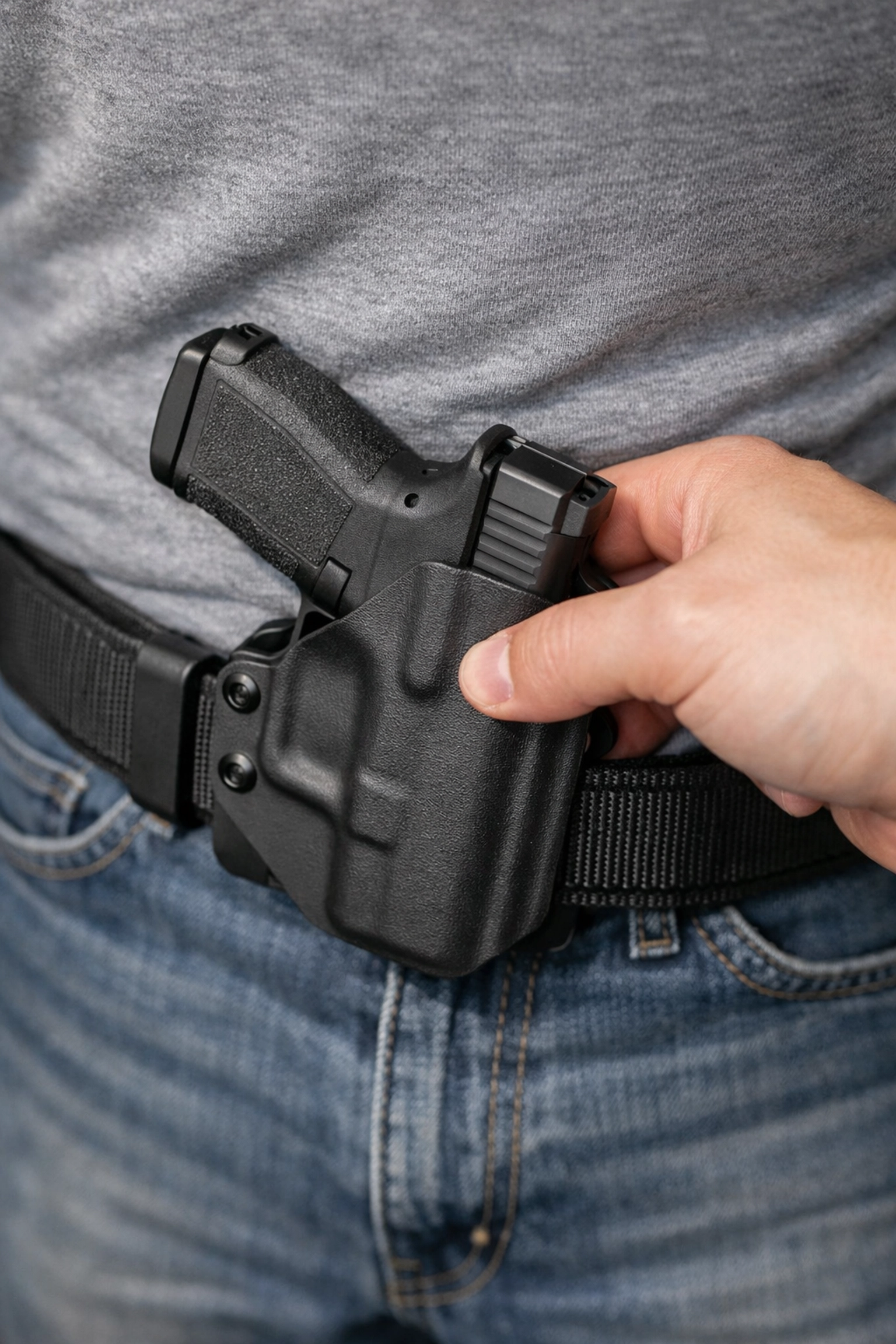
Before we dive into the "why," let’s define the "what." Appendix carry refers to wearing your firearm inside the waistband, positioned at the front of your body. Specifically, this is usually between your belly button and your hip bone: roughly the 12 o’clock to 2 o’clock position for right-handed shooters.
It’s called "appendix carry" because the holster sits directly over where your appendix is located. While it might seem intimidating to beginners, modern iwb holsters and specialized accessories have made this one of the most effective ways to stay armed and discreet.
There are three primary reasons shooters are ditching their hip holsters for the appendix position: concealment, speed, and security.
The biggest enemy of concealed carry is "printing": when the outline of your gun shows through your shirt. When you carry on your hip, the grip of the gun tends to poke out when you lean forward or reach for something on a shelf.
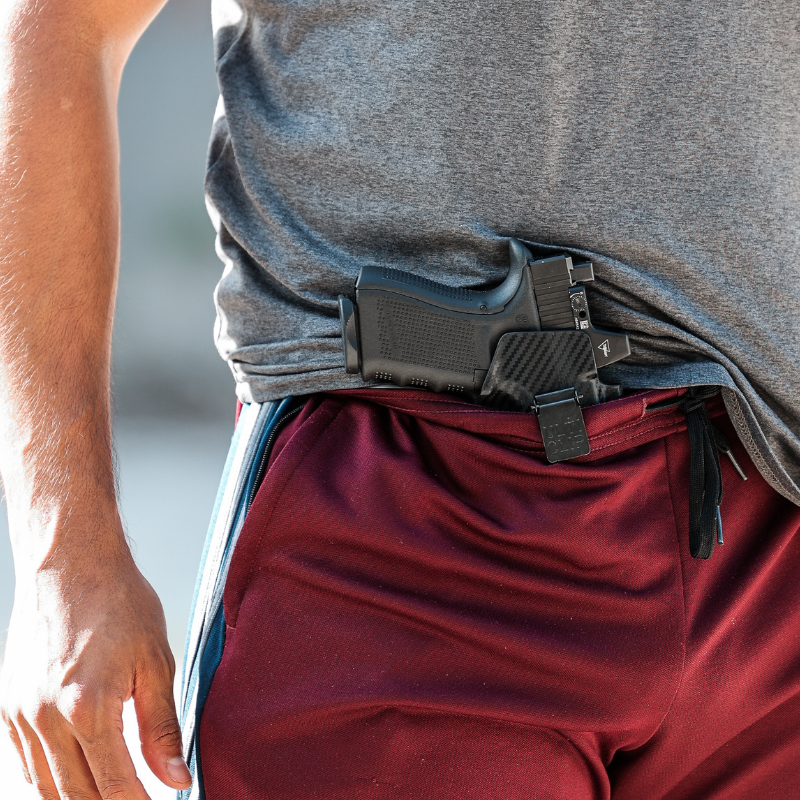
With appendix carry, the firearm sits in the natural "v-shape" of your torso. Most people have more room between their waistband and their shirt at the front of their body than they do at the sides. Furthermore, when you bend over, your shirt naturally drapes outward from your chest, creating a "tent" effect that hides the gun even better.
In a self-defense situation, every millisecond counts. Appendix carry offers the fastest access to your firearm because your hands are naturally closer to the front of your body. There’s no need to reach behind your hip or clear a long jacket. You simply lift your shirt with your non-dominant hand and grip the pistol with your dominant hand. It’s a direct, vertical path to the target with zero wasted motion.
If you find yourself in a physical struggle, a firearm on your hip is vulnerable. It’s harder to protect something you can't see. With AIWB, the gun is right in front of you. You can use your elbows, hands, and core to shield the weapon from an attacker. It’s much easier to retain control of your firearm when it’s within your immediate line of sight and reach.
Have you ever tried to draw a gun from a 4 o'clock holster while buckled into a car seat? It’s nearly impossible without major torso contortion. Appendix carry solves this. Because the gun sits in front of the seatbelt latch, you can access your weapon easily while driving or sitting at a desk.
We wouldn’t be doing our job if we didn't talk about the downsides. Appendix carry isn't for everyone, and it requires a specific set of gear and habits to pull off safely.
Let’s be honest: having a rigid piece of Kydex pressed against your stomach isn't always a walk in the park. Depending on your body type, the muzzle of the holster can dig into your thigh or groin when you sit down. This is often referred to as "the poke."
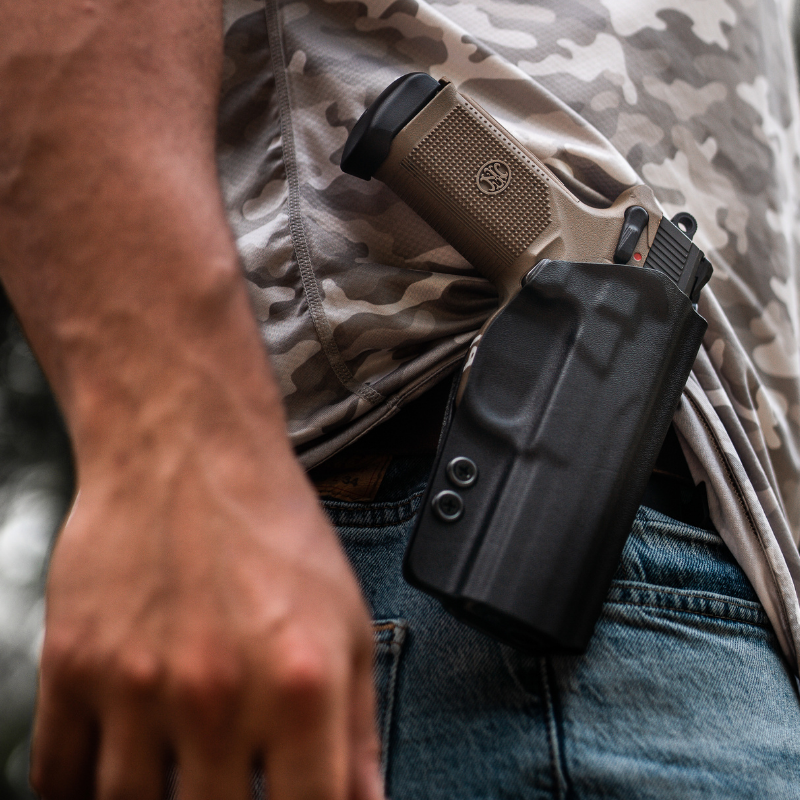
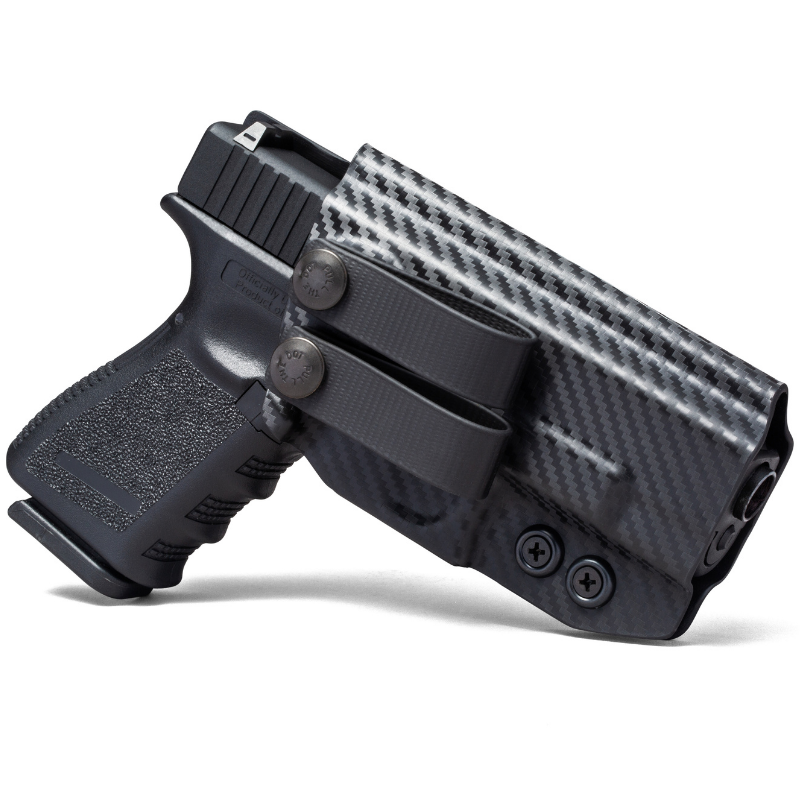
However, this is usually a gear issue rather than a position issue. Using a high-quality iwb holster can solve most comfort problems. Many shooters also find that a "wedge": a foam or rubber pad on the back of the holster: helps angle the muzzle away from the body, significantly increasing comfort.
The most common objection to appendix carry is safety. Because the muzzle is pointed toward sensitive areas (the femoral artery and lower anatomy), many people are nervous about a negligent discharge.
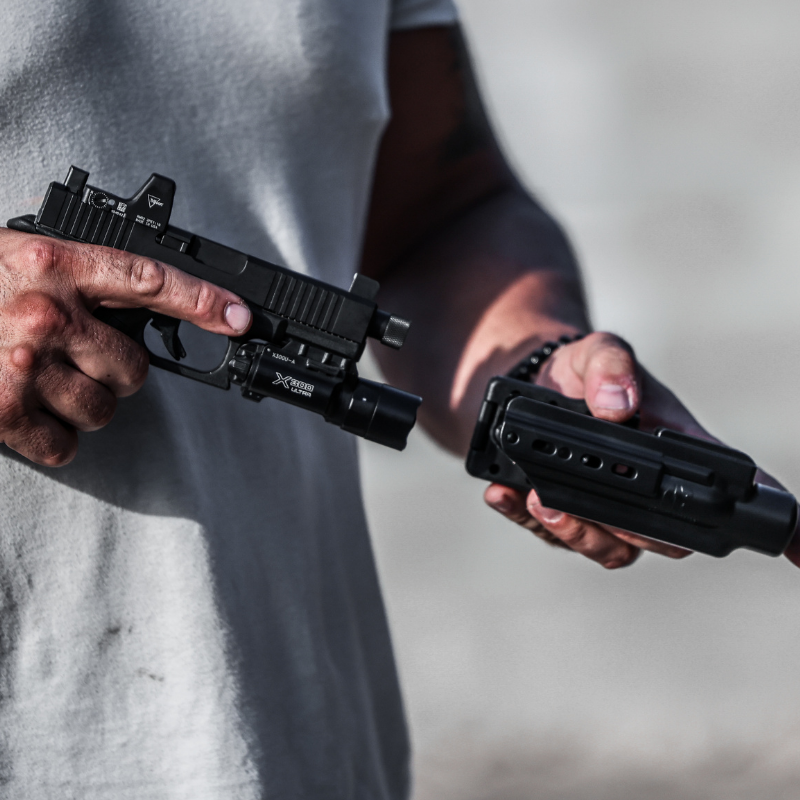
Safety in appendix carry comes down to two things: a high-quality holster and proper training. You must use a holster with a rigid trigger guard: like our Kydex models: that prevents anything from touching the trigger while the gun is holstered. You also need to practice "the look." Unlike hip carry, you can actually see your holster when you re-holster. You should always look your gun into the holster to ensure no clothing or drawstrings are caught in the trigger guard.
The "tactical muffin top" is a real thing. If you have a significant amount of weight in your midsection, appendix carry can be difficult. The stomach can push the grip of the gun outward, making it print more and causing the holster to dig in uncomfortably. While accessories like "claws" or "wings" help pull the grip back toward the body, AIWB generally favors those with a flatter midsection or those willing to adjust their pant size to accommodate the extra bulk.
You can’t just shove any IWB holster into the front of your pants and call it a day. Appendix carry requires a specialized setup to be effective.
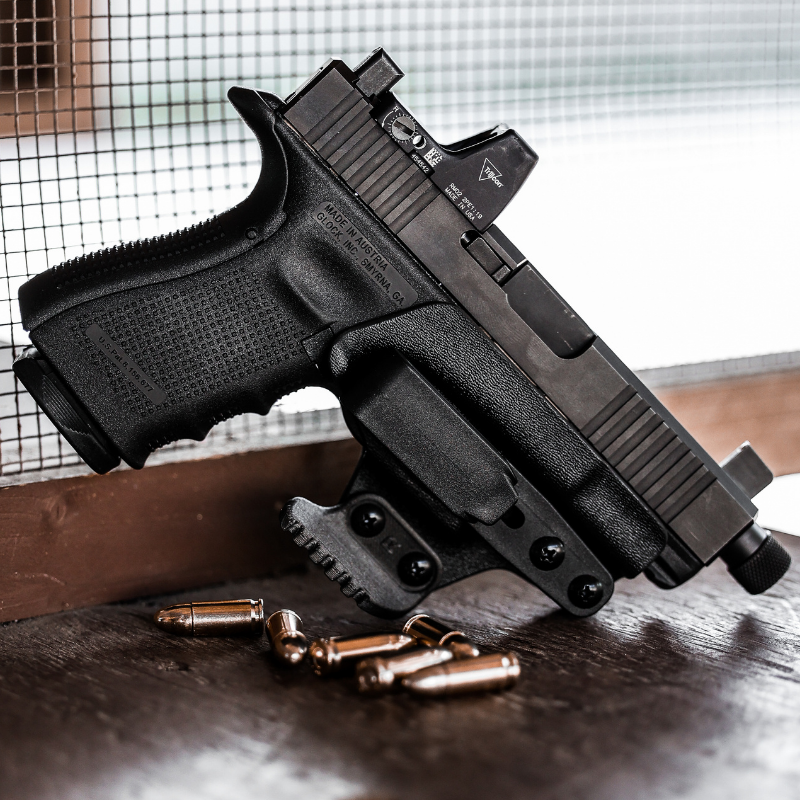
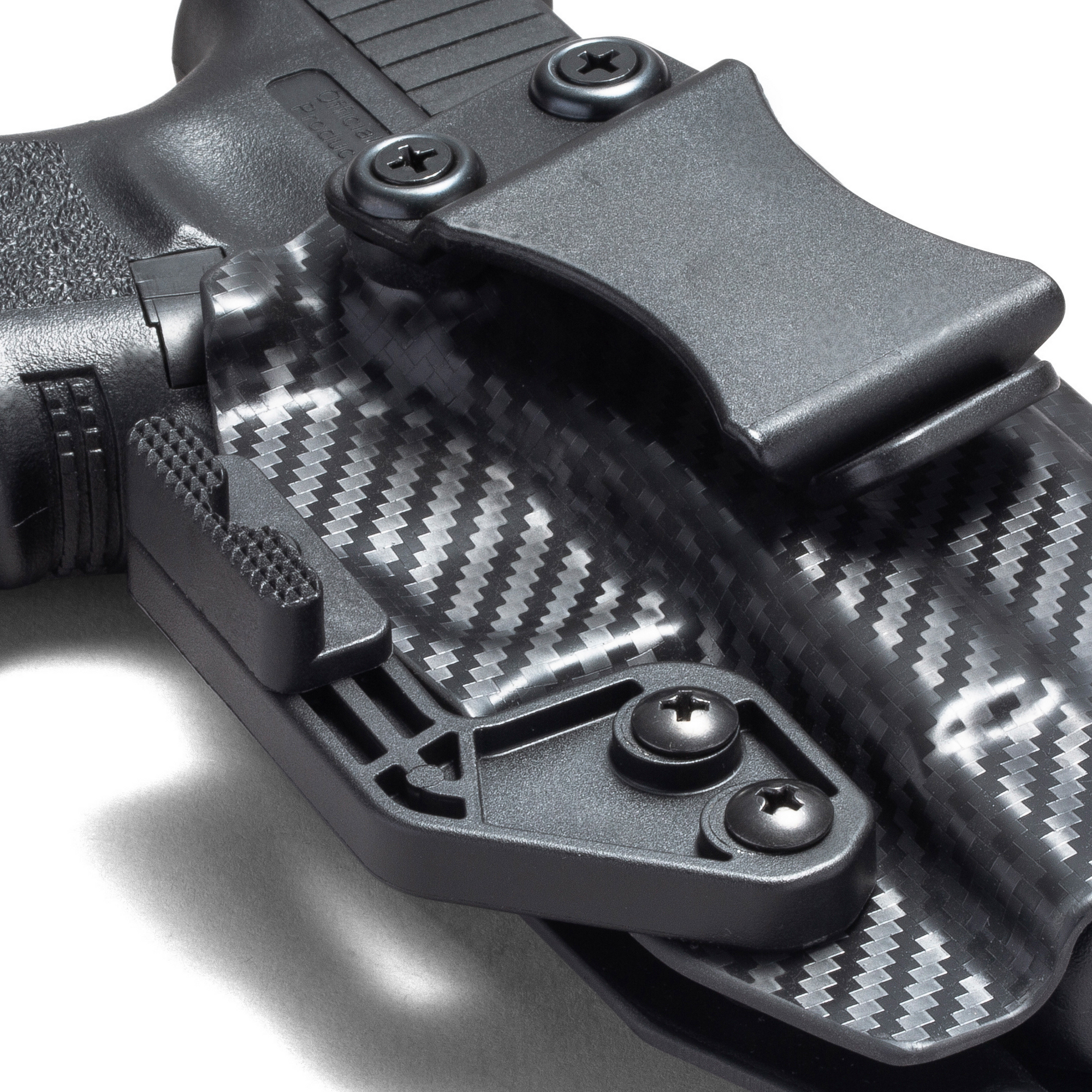
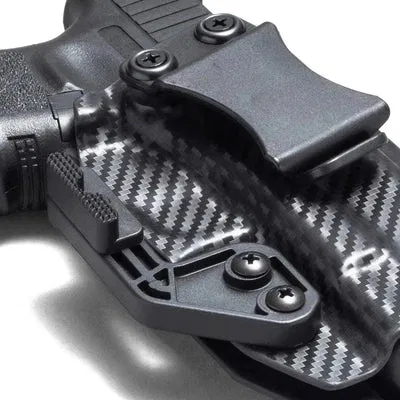
If your holster doesn't have a claw, you’re missing out. A claw is a small attachment that sits near the belt clip. It uses the pressure from your belt to leverage the grip of the pistol inward, tucking it tight against your stomach. This single feature is the difference between a gun that disappears and a gun that sticks out like a sore thumb.
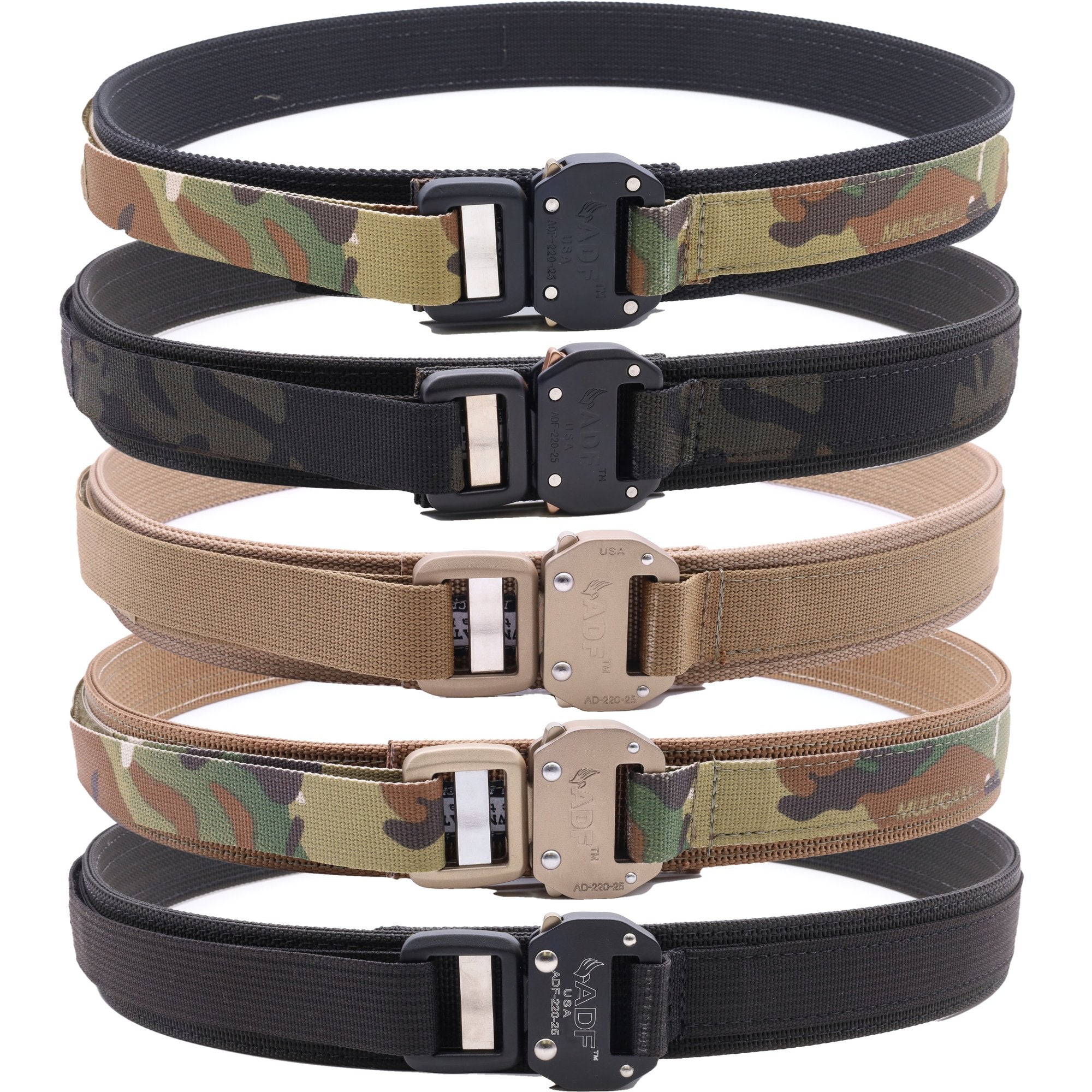
A "regular" leather belt won't cut it for AIWB. You need a dedicated gun belt that provides enough rigidity to support the weight of the firearm without sagging. However, for appendix carry, you often want a belt that is slightly more flexible than a traditional ultra-stiff OWB belt, allowing it to move with your body as you sit and stand.
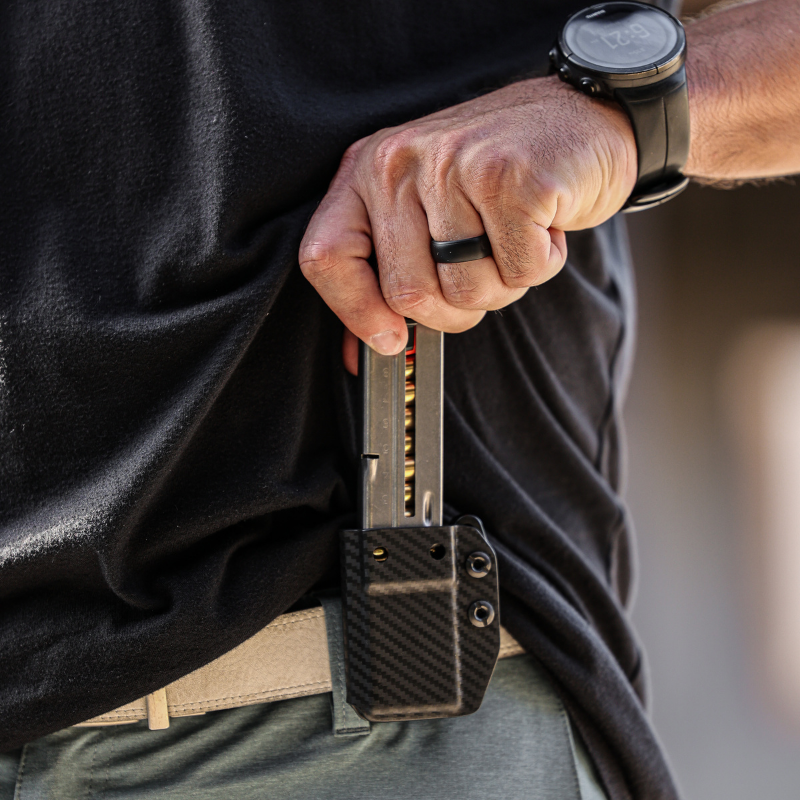
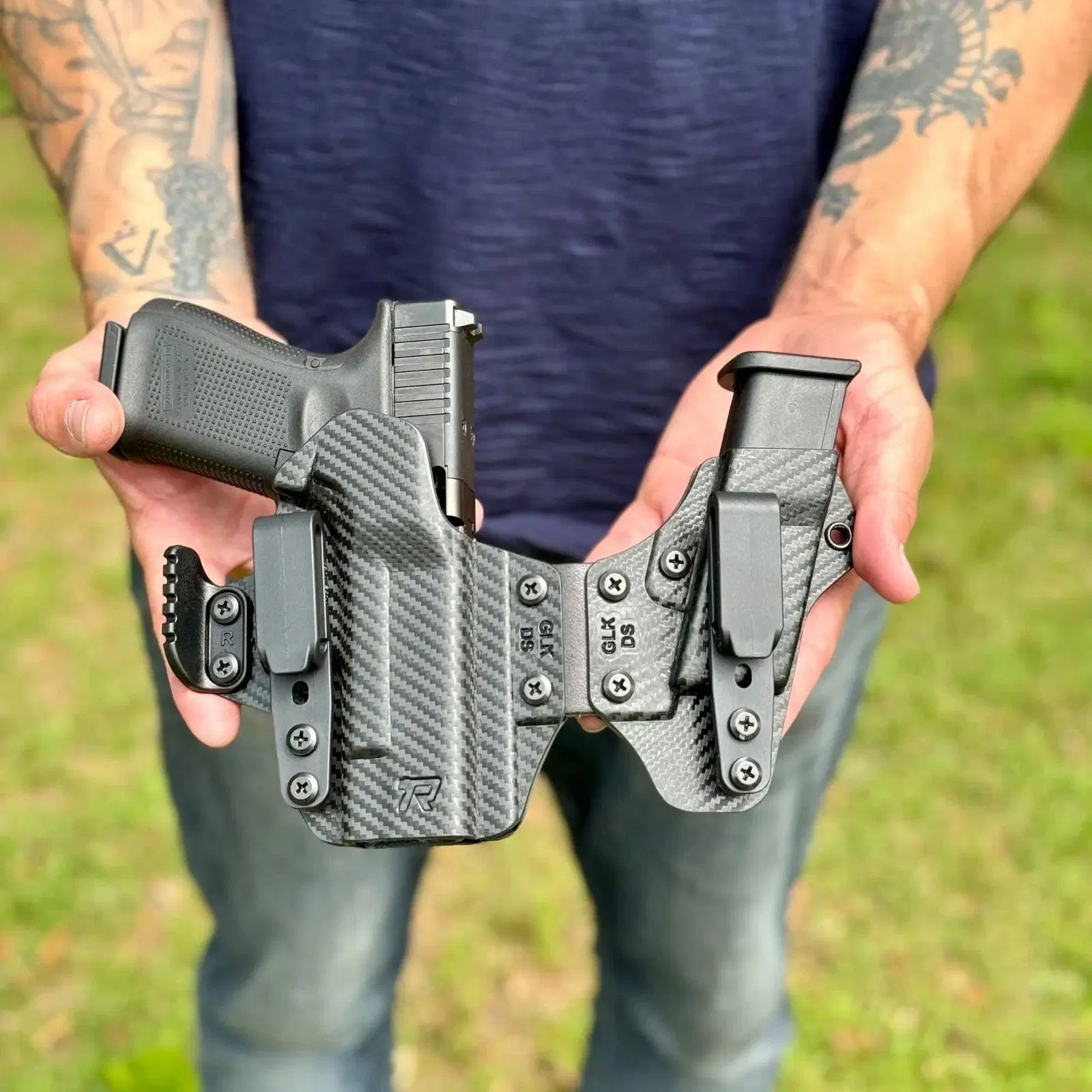
Many appendix carry enthusiasts prefer a "sidecar" style holster, which includes an attached spare magazine carrier. This balances out the weight across the front of your waistband and ensures you always have extra rounds on hand.
If you’re moving to appendix carry, you need to retrain your muscle memory. We highly recommend checking out our concealed carry video training course to see these techniques in action.
The only way to know for sure is to try it. Many of our customers start with a standard IWB holster and eventually move to a dedicated appendix setup once they realize the concealment benefits.
If you prioritize speed, want the best possible concealment, and are disciplined enough to follow strict safety protocols, appendix carry is hard to beat. If you spend most of your day sitting and find that a front-mounted holster is too restrictive, you might prefer a more traditional IWB position.
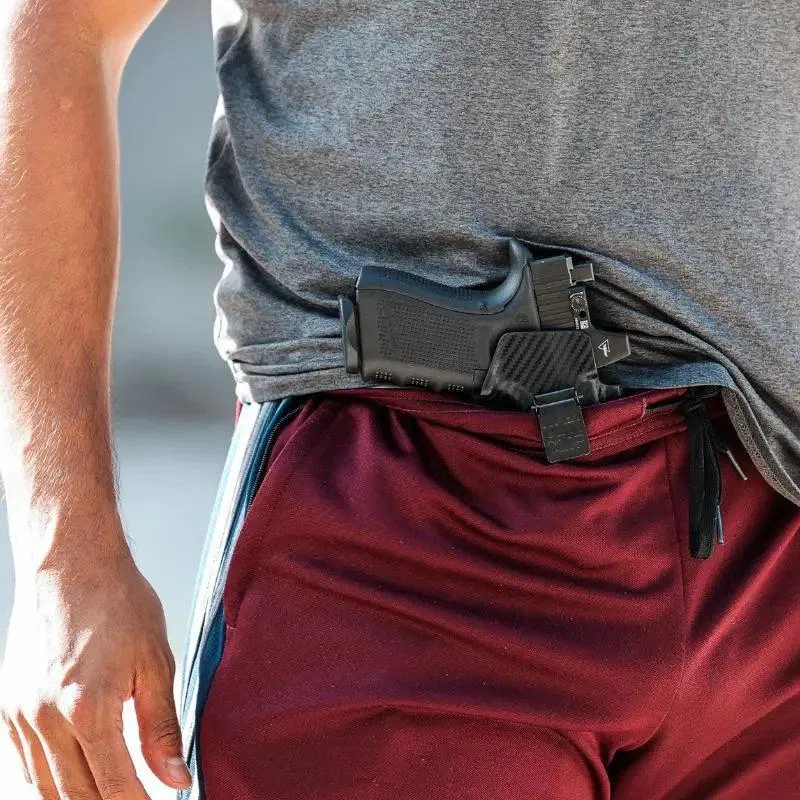
Appendix carry is gaining popularity because it works. It solves the biggest problem of concealed carry: making a full-sized firearm disappear under a simple T-shirt.
At Rounded by Concealment Express, we build appendix carry holsters designed for real-world use. Whether you choose a minimalist Kydex IWB or a full sidecar setup, our goal is to provide the gear you need to carry comfortably and confidently every day.
Ready to make the switch? Browse our full collection of American-made holsters and find the perfect fit for your EDC. If you have questions about fitment or positioning, check out our instructional videos for a deeper dive into the world of concealment.
Comments will be approved before showing up.