
IWB vs. OWB Holsters: Pros and Cons for Concealed Carry

March 10, 2026 6 min read

Choosing between Inside-the-Waistband (IWB) and Outside-the-Waistband (OWB) carry is the first major hurdle every gun owner faces. It’s not just about where the gun sits; it’s about how you live your life, what you wear, and how quickly you can react in a high-stress situation. At Rounded by Concealment Express, we see people struggle with this choice every day.

The truth is, there is no "perfect" holster, only the perfect holster for your specific needs at this exact moment. This guide breaks down the mechanics, the advantages, and the trade-offs of both carry styles so you can make an informed decision for your EDC (Everyday Carry) setup.

Lesson 1: Inside-the-Waistband (IWB) Fundamentals

IWB carry is the gold standard for deep concealment. The holster sits between your body and your pants, secured to your belt with clips. Because the bulk of the firearm is tucked inside the waistband, the only part that needs to be concealed by clothing is the grip.
The Advantages of IWB

  1. Maximum Concealment: This is the primary reason people choose IWB. By utilizing the space inside your pants, you minimize "printing", the visible outline of a gun through your clothes. This allows you to wear more fitted clothing or lighter layers like a T-shirt.
  2. Security: Because the holster is pressed between your body and your waistband, it is incredibly secure. It’s much harder for an assailant to attempt a "gun grab" when the weapon is tucked away.
  3. Versatility: IWB holsters can be moved to different positions around the waist, appendix (front), hip (3 o'clock), or behind the hip (4-5 o'clock), depending on your body type and comfort.

The Drawbacks of IWB

  1. The "Comfort" Factor: Having a piece of Kydex and metal pressed against your skin or undergarments can be abrasive. It often requires you to buy pants one size larger than usual to accommodate the extra bulk.
  2. Slower Draw Speed: Because the gun is tucked deeper and usually covered by a tighter garment, the draw can be slightly slower than an OWB setup. It requires more practice to clear your garment consistently.
  3. Heat and Sweat: In summer months, having the holster close to your body can lead to sweating. This is why we use high-quality Kydex that is sweat-resistant and easy to clean.

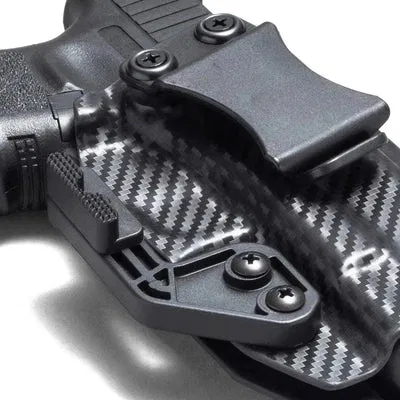
Close-up of a black carbon fiber-pattern KYDEX inside-the-waistband holster

Lesson 2: Outside-the-Waistband (OWB) Mechanics

OWB holsters transition the firearm to the outside of the belt. While historically associated with open carry or duty use, modern slim-profile Kydex OWB holsters have made concealed OWB carry a viable reality for many.
The Advantages of OWB

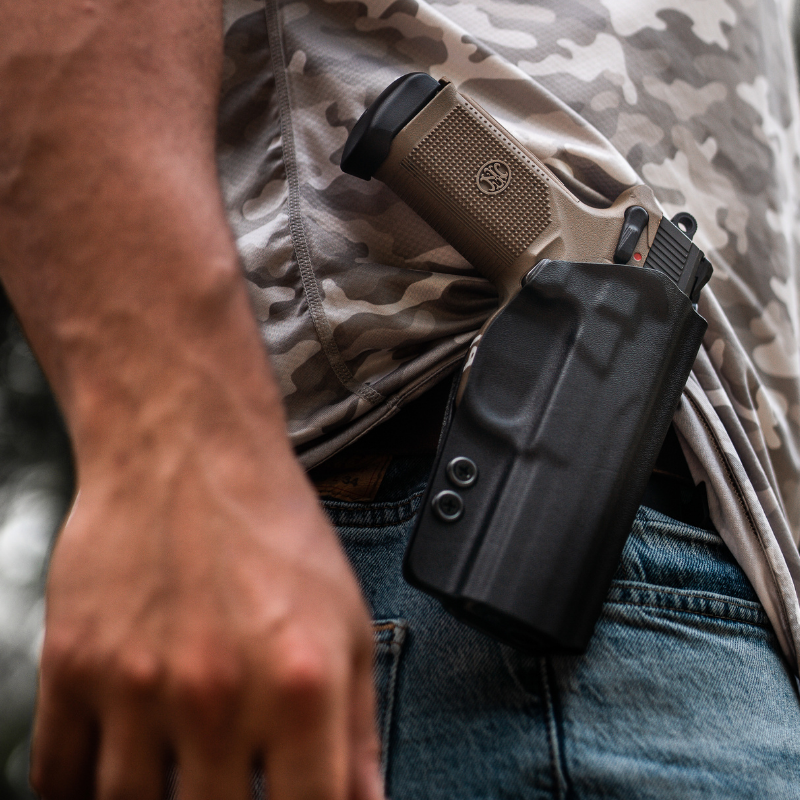
  1. Superior Comfort: There is nothing inside your pants pressing against your hip or stomach. This makes OWB the preferred choice for long days on your feet, hiking, or working on the range.
  2. Speed of Access: Your hand can find the grip of the gun much faster. There is less "searching" through layers of clothing, and the clearance from your body allows for a cleaner, more vertical draw.
  3. Better for Large Firearms: If you carry a full-size pistol like a Glock 17 or a Sig P320, IWB can be physically taxing. OWB distributes the weight across the belt more effectively.

The Drawbacks of OWB

  1. Concealment Challenges: To hide an OWB holster, you generally need a "cover garment" like a loose flannel shirt, a jacket, or a hoodie. In hot weather where you only want to wear a T-shirt, OWB is very difficult to pull off without printing.
  2. Snag Risk: Since the holster is on the outside, it’s more prone to catching on door frames, seatbelts, or branches if you’re outdoors.
  3. Stability: Unless you are using a high-quality gun belt, an OWB holster can "flop" or lean away from the body, making it both uncomfortable and obvious.

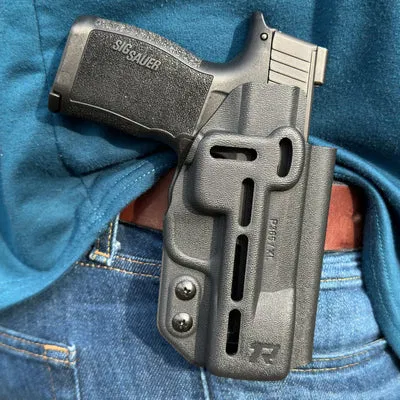
OWB KYDEX holster securely holding a Sig Sauer pistol on a brown belt

Lesson 3: The Concealment-Comfort Spectrum

When deciding between the two, you need to evaluate where you fall on the concealment-comfort spectrum.

  • Priority: Concealment. If you work in an office environment or live in an area where "printing" could cause significant social or legal headaches, IWB is your best bet. A slim-profile IWB Kydex holster is designed to disappear under a standard button-down or T-shirt.
  • Priority: Comfort/Accessibility. If you spend most of your time outdoors, on a range, or in a vehicle where drawing from IWB is difficult, OWB is the winner. It allows for better airflow and doesn't pinch when you sit down.

Many experienced carriers actually own both. They might use an IWB setup for daily errands and switch to an OWB setup for winter months when jackets provide easy coverage. You can browse our full collection of holsters to see which footprint fits your lifestyle.

Lesson 4: Critical Factors to Consider

1. Body Type

Body shape plays a huge role in holster selection.

  • Thin/Athletic Build: IWB often works best at the appendix position because the natural "hollow" in the front of the body hides the gun well.
  • Larger Build: IWB at the 4 o'clock position (behind the hip) or OWB carry is often more comfortable. Large stomachs can make appendix IWB carry uncomfortable when sitting.

2. Wardrobe

Take a look at your closet. Do you wear fitted shirts and slim jeans? You’ll likely need an IWB setup. Do you prefer untucked flannels, vests, or light jackets? You can easily get away with OWB. If you like carrying while active, our minimalist IWB options are perfect for athletic gear and drawstring shorts.
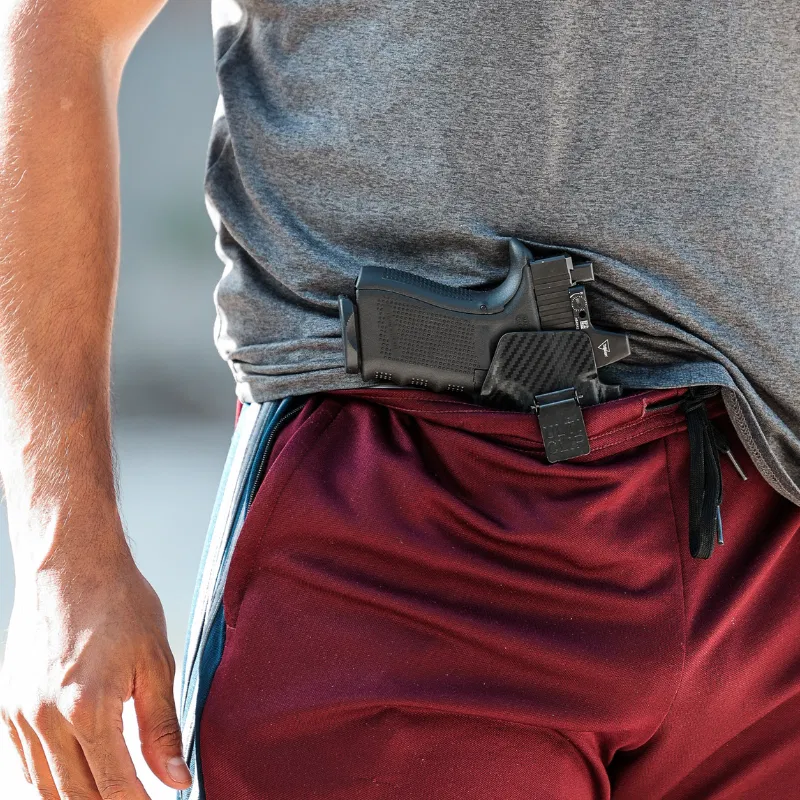
Person wearing a compact pistol in a black minimalist KYDEX IWB holster with athletic wear

3. The "Claw" and Cant

If you choose IWB but struggle with the grip of the gun sticking out, consider a "Claw" attachment. A claw pushes against the back of your belt, rotating the grip of the gun into your body for better concealment. Additionally, look for holsters with adjustable "cant" (the angle at which the gun sits). A slight forward tilt can make a huge difference in both comfort and how much the gun prints.

Lesson 5: Technical Maintenance and Safety

Regardless of whether you choose IWB or OWB, your equipment is only as good as your maintenance. Kydex is durable, but you should regularly check your retention screws. Over time, vibrations from walking or moving can loosen them.

Pro Tip: Use a small amount of blue Loctite on your holster screws once you’ve found your perfect retention setting. This ensures the holster stays tight but remains adjustable if needed.

Safety is also paramount. A holster must completely cover the trigger guard to prevent accidental discharge. All of our Kydex holsters are precision-molded to the specific firearm model to ensure a perfect "click" into place. This "audible click" lets you know the gun is secure without you having to look down at your waistband.

A close-up of a black handgun and a carbon fiber-patterned KYDEX holster

Lesson 6: Training is Not Optional

Buying the holster is only step one. You must train with your specific setup. If you carry IWB, you need to practice clearing your shirt hundreds of times (with an unloaded firearm) until the motion is muscle memory. If you carry OWB, you need to practice drawing without the holster "snagging" on your cover garment.

Many shooters make the mistake of practicing at the range with an OWB holster for "ease," but then they carry IWB in their daily life. This is a dangerous discrepancy. You should train exactly how you carry. For those looking to level up their skills, we offer a comprehensive Concealed Carry Video Training Course that covers the fundamentals of drawing, situational awareness, and safety.

Summary Checklist

Before you buy, ask yourself these four questions:
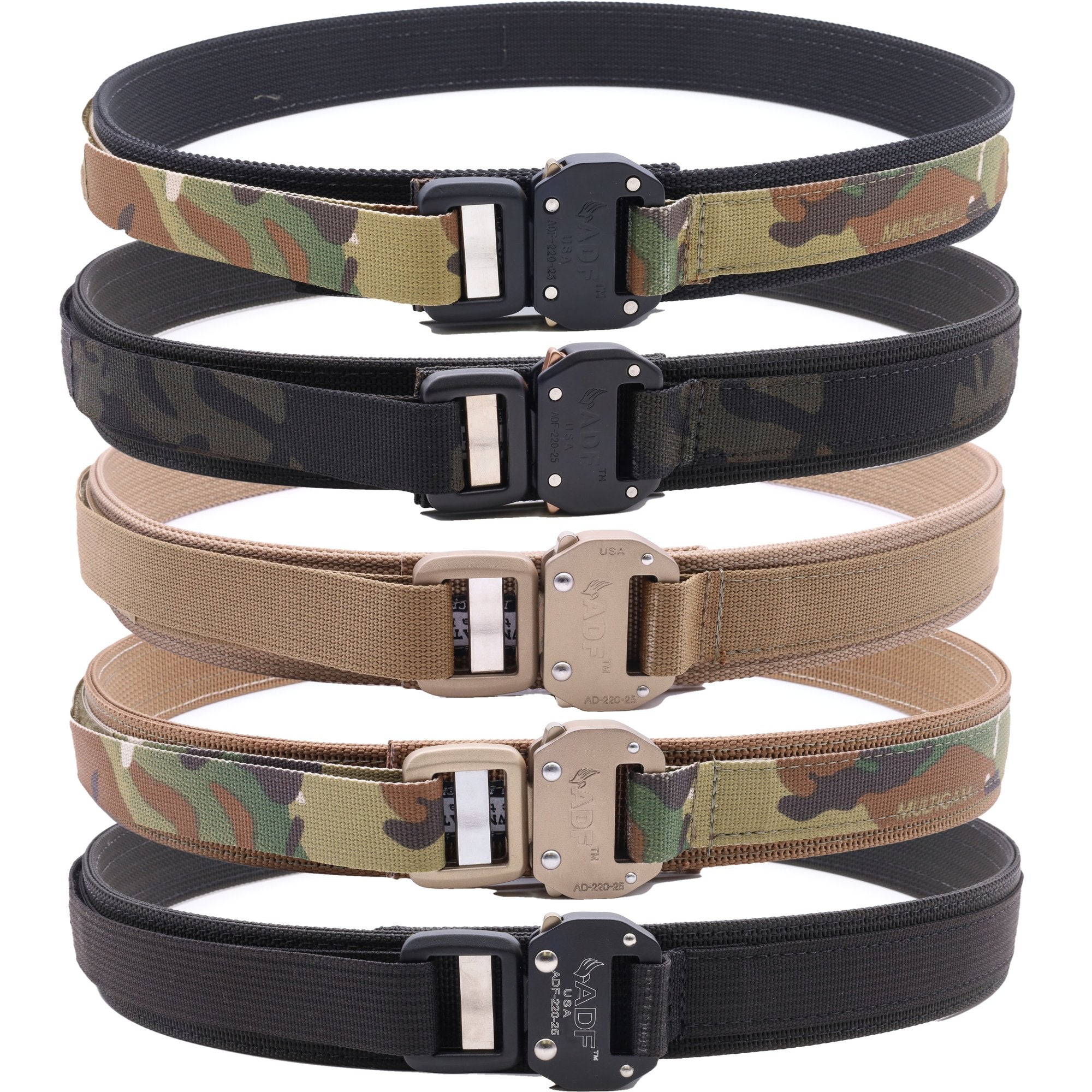
  1. Can I commit to wearing a belt every day? (Both IWB and OWB require a sturdy belt).
  2. Does my daily attire allow for a cover garment? (If no, go IWB).
  3. Am I physically comfortable with something inside my waistband? (If no, go OWB and adjust your shirt size).
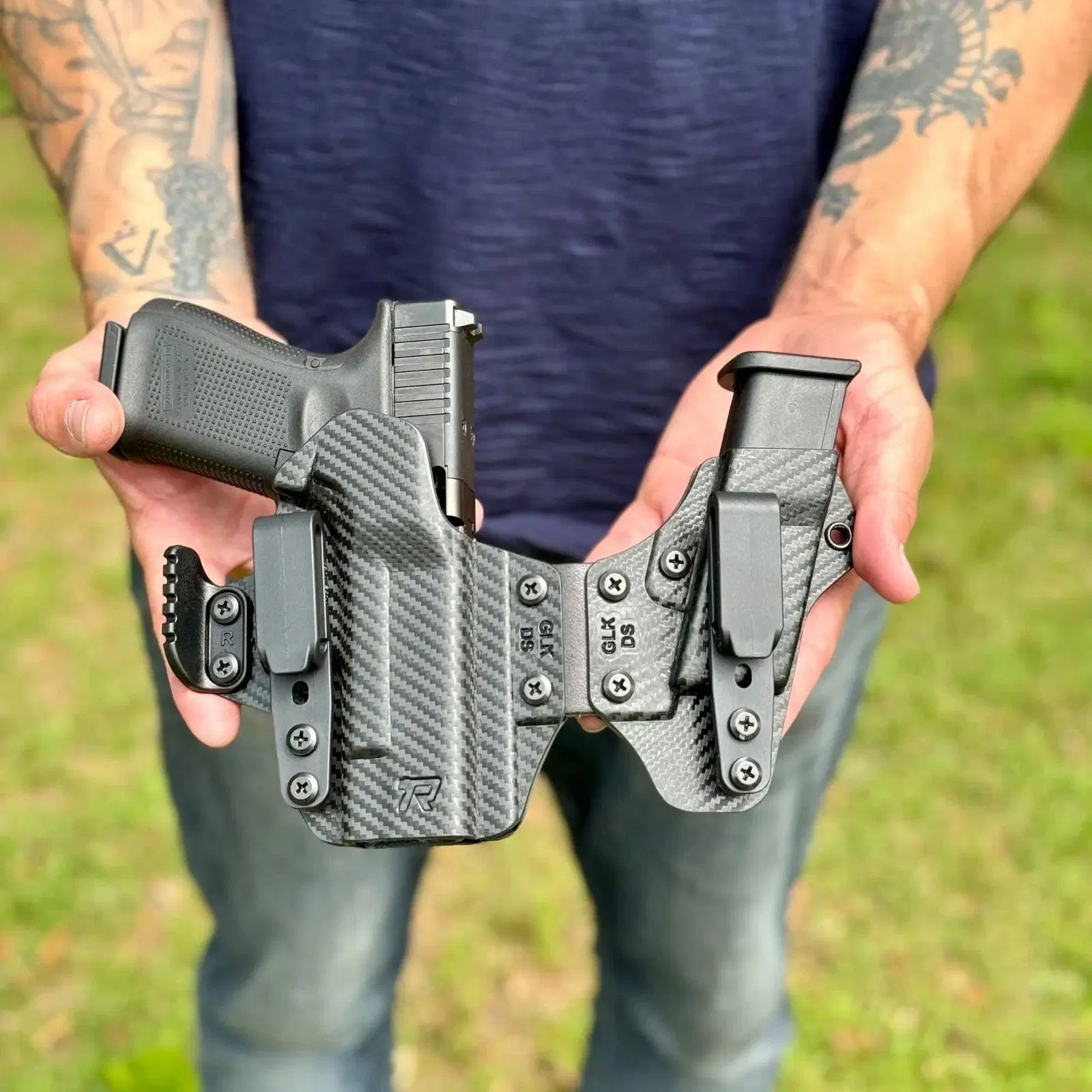
  4. Is my firearm a sub-compact or a full-size? (Full-size guns are generally better suited for OWB or specialized IWB setups like sidecar holsters).

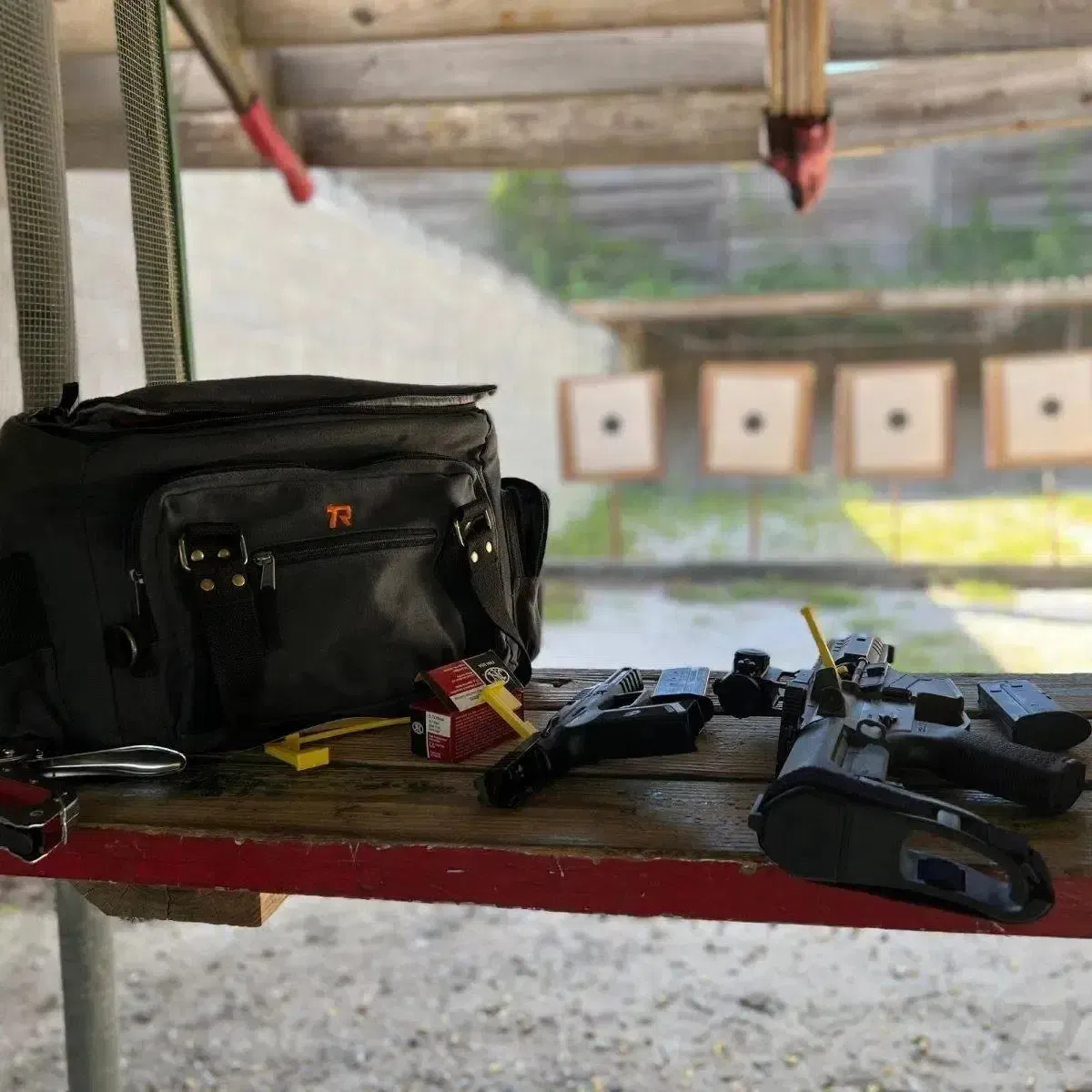
Range bench setup featuring a tactical range bag and gear

Whether you’re looking for your first holster or your fifteenth, the goal is the same: stay safe, stay comfortable, and stay prepared. Choose the gear that fits your life, not the life you think you should have. If you need more help deciding, check out our instructional videos for a deep dive into specific model fits and carry techniques.

Leave a comment

Comments will be approved before showing up.