Your Cart is Empty



You just spent $600 on a high-end concealed carry pistol. You spent another $60 on a precision-molded Kydex holster. You head to the closet, grab the same leather belt you’ve worn to every wedding and office meeting for the last five years, and head out the door.
Within two hours, your pants are sagging. Within four hours, you’re constantly hiking up your waistline. By the end of the day, your hip hurts, and you’re convinced that concealed carry is just naturally uncomfortable.
The problem isn't your gun, and it isn't your holster. The problem is your belt.
At Rounded by Concealment Express, we see this mistake constantly. People treat the belt as an afterthought when it is actually the foundation of your entire carry system. If the foundation is weak, the whole system fails. Here is exactly why a specialized concealed carry belt is a non-negotiable piece of gear.
The most common question we get is: "Why can't I just use a thick leather belt from a department store?"
The answer comes down to engineering and intent. A regular belt is designed for one job: keeping your pants from falling down. It is made to be flexible and comfortable against your waist. A concealed carry belt is designed to be a piece of load-bearing equipment. It has to support the weight of a firearm, a holster, and potentially spare magazines without deforming.
A loaded compact handgun typically weighs between 1.5 and 2.5 pounds. When you clip that weight onto a standard belt, the material begins to stretch and sag at the point of contact. This creates a "V" shape in your waistline. Not only does this look sloppy, but it also pulls your pants down, forcing you to overtighten the belt to a point of discomfort just to keep your gear in place.
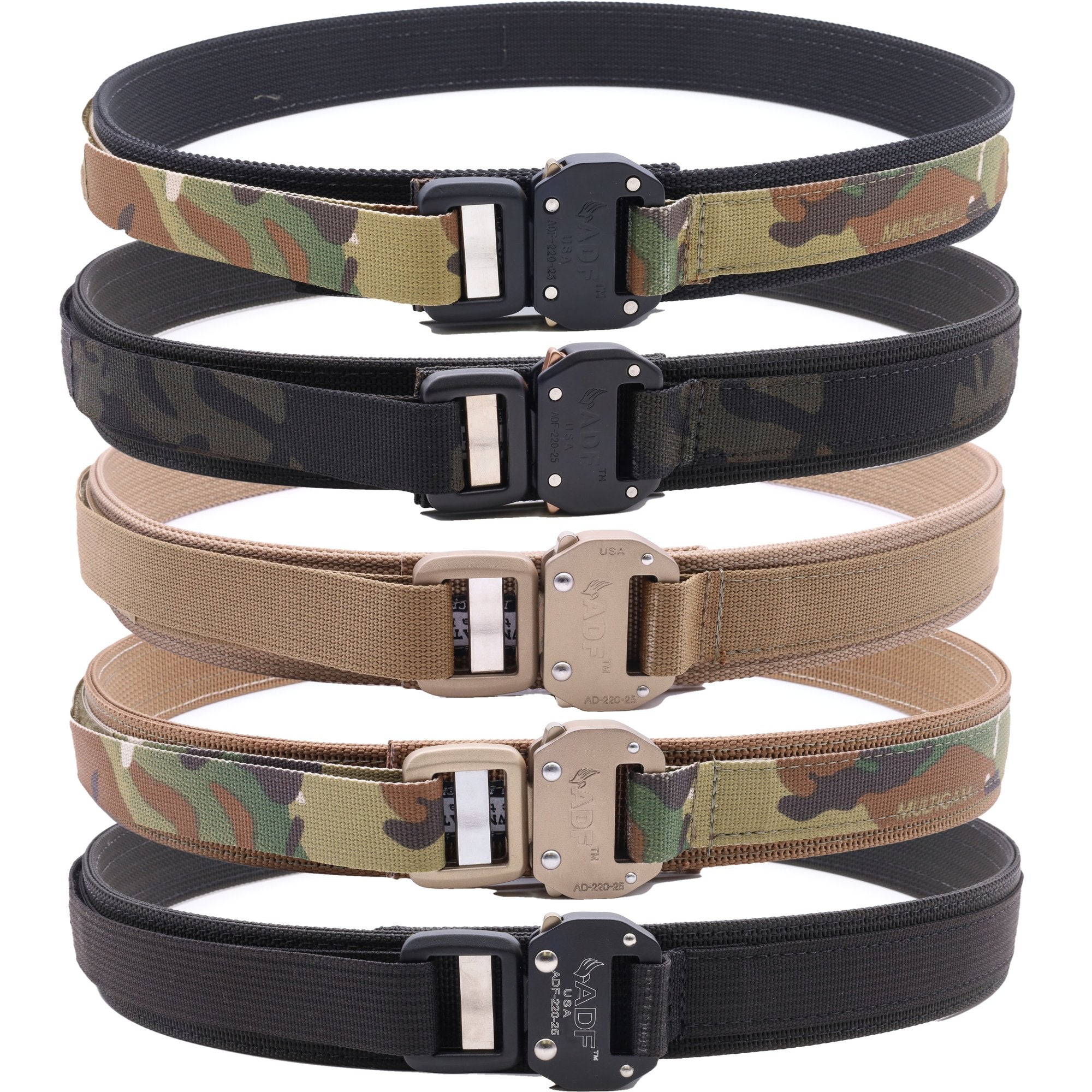
A quality gun belt uses reinforced materials: like high-density nylon or internal polymer stiffeners: to provide vertical rigidity. This allows the belt to distribute the weight of the firearm around your entire waist rather than letting it sit on a single point on your hip.
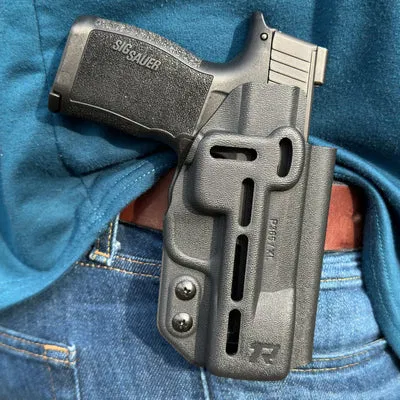
This is the most overlooked aspect of the gun belt vs. regular belt debate. Torsional stiffness refers to the belt's resistance to twisting or "rolling" outward.
When you holster a firearm, the weight of the grip naturally wants to pull the top of the holster away from your body. A regular belt is soft; it will twist under that pressure. When the holster tilts outward, two things happen:
A purpose-built gun belt resists this twisting. It keeps the holster pulled tight to your body, ensuring maximum concealment and a rock-solid platform.
In a defensive situation, your draw stroke relies entirely on muscle memory. You practice reaching for your firearm at a specific height and a specific angle.
If you are wearing a standard belt that sags and shifts throughout the day, your gun is never in the same place twice. One hour it’s at 3 o'clock; the next hour, the belt has sagged, and the grip has tilted back to 4 o'clock. If you have to draw under stress, those few inches of shift can lead to a fumbled draw or a complete miss of the grip.
Furthermore, a flimsy belt can cause the holster to "ride up" when you pull the gun. If the belt doesn't provide enough resistance, you might find yourself pulling both the gun and the holster toward your armpit instead of a clean release. A rigid belt ensures the holster stays exactly where it belongs while the gun comes out.
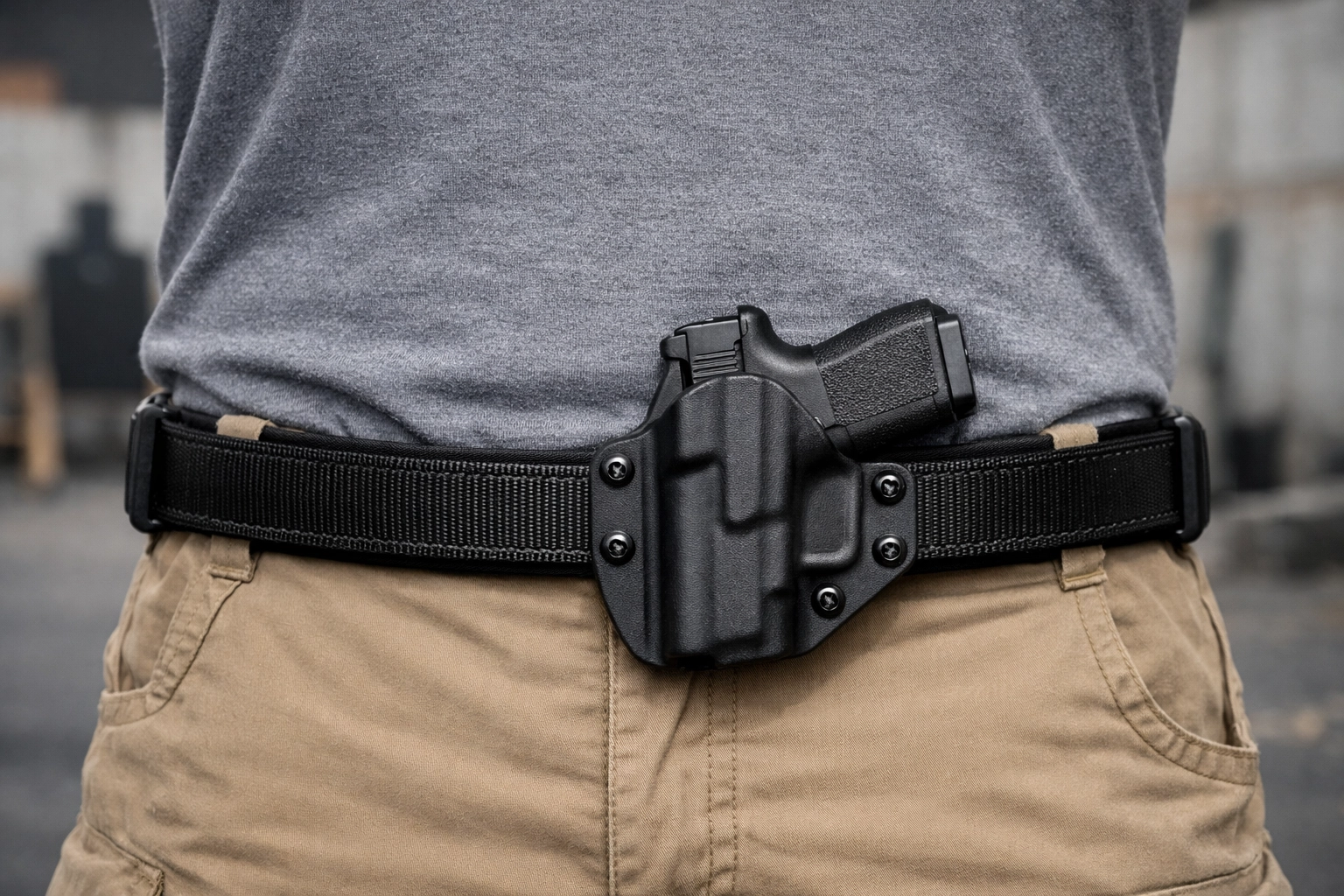
Concealed carry is a game of angles. To hide a firearm effectively, you need the grip of the gun to tuck into the natural void of your waistline.
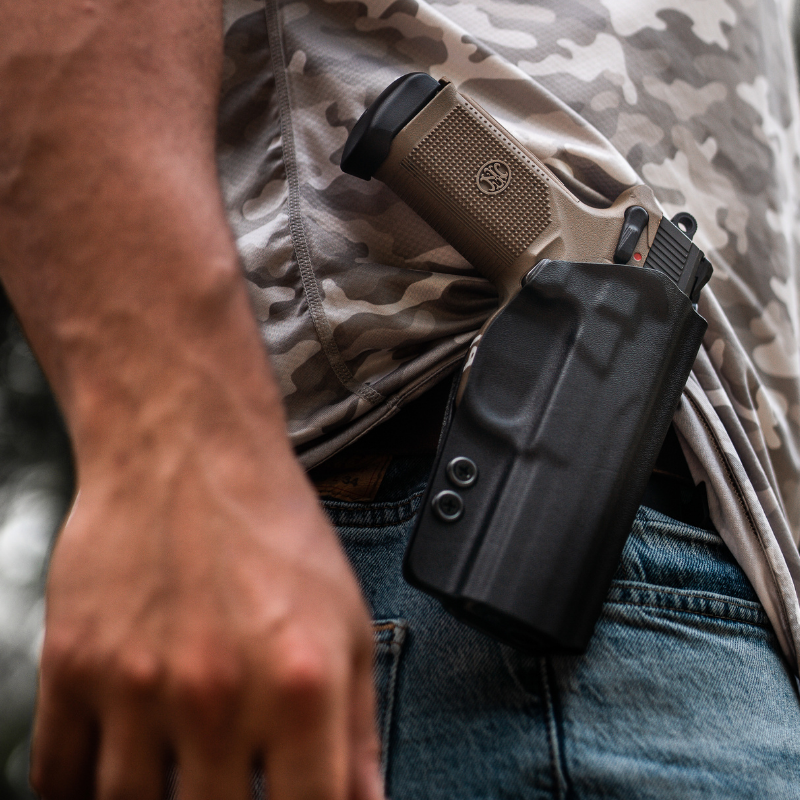
When you use a high-quality IWB (Inside the Waistband) holster, like our carbon fiber Kydex models, the belt is what provides the leverage. If the belt is weak, it can't press the holster's "claw" or "wing" into the waistband effectively. A stiff belt acts as a lever, forcing the holster to stay flat against your body. This allows you to carry even larger firearms with zero visible printing.
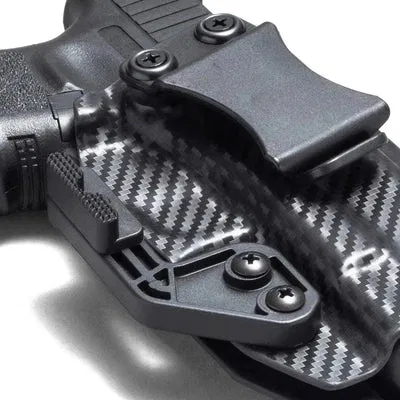
It sounds counterintuitive, but a stiffer belt is actually more comfortable for all-day carry.
When your belt lacks support, the weight of the gun creates pressure points on your hip bones. Most people respond by tightening their belt one notch further, which constricts the waist and leads to back pain.
Because a specialized concealed carry belt distributes the load evenly, you don't have to crank it down to keep your pants up. The belt does the work of supporting the weight, leaving you free to move naturally. Whether you’re sitting at a desk, driving, or walking, a proper belt eliminates the "dragging" sensation that leads to CCW fatigue.
When shopping for a belt, look for these specific features:

We didn't just stop at making the best holsters in the USA. We know that our holsters perform best when paired with the right support system. Our philosophy is straightforward: gear should be reliable, durable, and functional.
If you're still using a "work belt" for your EDC (Everyday Carry), you're only getting half the performance out of your gear. Switching to a dedicated gun belt is usually the single biggest "Aha!" moment for new concealed carriers. It’s the difference between feeling like you’re carrying a heavy brick and feeling like your gun is a natural extension of your clothing.
Don't let a $15 belt be the weak link in your life-saving equipment. A quality gun belt is an investment that usually lasts for years and significantly improves your safety, comfort, and concealment.
If you have questions about which belt width or material is right for your specific holster setup, check out our Frequently Asked Questions or dive into our Instructional Videos to see our gear in action.
Stop fighting your gear. Get a belt designed for the job and carry with confidence. Explore our full range of accessories at Rounded by Concealment Express.

Comments will be approved before showing up.